There's nothing quite like being forced to watch Super Size Me for the fourth time to bring out the "we got the memo" mood in me.
I think one of the interesting things about the PSAs about the dangers of smoking, eating fast food, safe driving, etc., is the fact that no one I know doesn't already know about them.
We've been raised in a culture that knows that certain behaviors are dangerous. I think a lot about the rise in "molly" or MDMA use in the EDM culture -- and how, if you let people in on the little secret that MDMA is pure ecstasy, no one didn't know that it could be dangerous. I remember talking about ecstasy in DARE (drug awareness education program) in elementary school. We all knew what it was and why it could be so dangerous.
I also think about fast food or junk food consumption -- we pretty much all know it's bad for us. Shaming someone who's eating it doesn't suddenly make them suddenly decide that it's not good for them and stop.
The choices people make: to smoke, or eat unhealthy food, or do things they know can be unsafe, are made, at this point, in spite of the fact that everyone knows they're bad. Why people might choose to do something they know isn't good for them comes down to temporarily weighing pros and cons or the cognitive dissonance between what they know and what they want or believe. It's not a matter of PSAs...it's about changing attitudes, day in and day out, to change the instinctive reactions that override the rational knowledge.

This is a blog about things, about thinking about things, about talking about things, and about being as snarky and poignant as I can manage. I hope you enjoy it.
Wednesday, November 6, 2013

Sunday, October 20, 2013
On Mental Illness and Identity
Watching a PBS Frontline documentary about the rise in diagnoses and medications for young children with mental illness, I was caught by something.
This documentary, which is supposed to objectively address the controversy surrounding early childhood mental healthcare (particularly early exposure to psychoactive medications) and which featured psychologists, and psychiatrists, experts in the field, was making a glaring error.
"My patients were bipolar."
Your patients are not bipolar. For a lot of people struggling with mental illness, the recognition that they do not have to be defined by their battles, is a massive step forward in recovery or control. You would never tell a cancer patient that their diagnosis made THEM cancerous. We recognize that an illness does not have to fundamentally define the person who has it.
And yet, one of the most stigmatizing things you can do to a person with mental illness is to define them by their illness. Your patient is not bipolar. Your patient has bipolar disorder. Your patient may also have acne, irritable bowel syndrome, blue eyes, or a debilitating disability. None of these things define that patient. They are a whole, complex human being, defined by their wants and needs, goals, history, friends, family, talents, weaknesses, and more. You provide a huge blow to their sense of self-worth to reduce them to their diagnosis.
Especially as a care provider, this kind of stigmatizing language is incredibly unacceptable. How is a patient supposed to see themselves as something beyond their disorder if you, as the expert who is supposed to help them, cannot?
Identifiably yours,
Rachel Leigh
Sunday, October 13, 2013
On Poverty and Mental Health
I've started to think that mental health is a problem for the wealthy.
I don't mean to say that it's a first world problem which doesn't matter for anybody else -- I think just the opposite. The National Day Without Stigma was this past week, and as always, it just reminded me of how prevalent mental illness is in the world.
And what it really made me start to wonder was about what your options are if you don't have health insurance and can't afford to see anyone. I've been working a bit with a substance abuse rehabilitation facility in Richmond, and to some extent, it's become clear that for some people, that is their option.
Mental illness does not discriminate based on age, race, or social class. If anything, being in a poorer situation increases the chances that you will struggle with depression and anxiety. But the options we have to help people work through these concerns are expensive -- expensive therapies, expensive drugs, appointments with expensive therapists. The options for those who can't afford those are, statistically, homelessness, prison, substance abuse and rehabilitation (if they can afford it or it's court-ordered), or hospitalization in extreme, high-risk cases.
The fact is that we've created a system that works pretty well for those who have access to it, but we've economically-barred some of the highest-need populations from being able to access mental healthcare.
Mental health advocacy is not simply advocacy for those who have the resources. It is also advocacy for those who have never had the resources to get the help they need.
Thinking,
Rachel Leigh
Friday, October 4, 2013
On the Shutdown
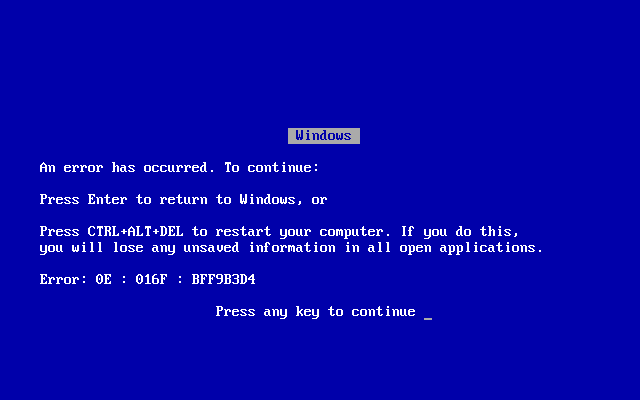
Have you tried turning your government off and back on again?
It's all been very exciting and such, what with people worrying about what it means for the progression of our country. But I'm getting kind of tired of hearing people (namely, Fox News people) say that no one has really been affected.
First and foremost, we look like a laughing stock. One of Congress's big jobs is to approve a budget. In fact, it's pretty much their biggest job. People forget the power that money has -- setting a budget essentially sets the priorities for the next year. The fact that political tensions have gotten so high that Congress can't perform its fundamental function speaks volumes about the general illegitimacy of the U.S. system right now.
Contingent Consent. Maybe you've heard of it. Chances are you probably haven't. Contingent consent is a necessary piece in a functional and competitive democratic state. It's the idea that you will win some elections and lose others, and that whichever side (or sides) loses will agree to live under the laws and rules of the side that won -- with the understanding that in the next election, you have the ability to unseat the other party if you don't like what they've done.
The only way to preserve rule of law under a democratic system is the acceptance of this idea of contingent consent -- the system can't function if you play by the "I lost, so I'm taking my toys and going home" mentality. Which is exactly what we've got going right now.
Aside from the general "the reputation of the United States as a whole is at stake (compounded with the PRISM fiasco, the invasion of sovereign borders, several unnecessary wars, growing distrust of the U.S. and the West, etc)" issue, there are people being affected. A friend of mine can't work on his thesis because he can't access the Library of Congress or the National Archives. Many women and children who receive federal WIC funding will not receive their stipend in time if this isn't sorted out. National Parks, federal funding for public education, GDP, "nonessential" federal employees, and more all stand to lose out if this shutdown and budget crisis aren't dealt with immediately.
The fact that you got your mail like always today doesn't mean that people aren't hurting.

Frustratedly yours,
Rachel Leigh
Wednesday, September 25, 2013
On Why I Hate the Filibuster
The first thing many of you are probably wondering is why I'm writing this post now, instead of back in June when Wendy Davis was filibustering on the Texas State Senate floor about the anti-abortion bill before the state legislature.
I wish I had a good answer for that. Partially, because as much as I don't like the filibuster as a tactic, it's because I think Wendy Davis is kind of a badass. Partially, it's because this is not a non-partisan blog. And, mostly, it's because I was making the same argument on Facebook and it never crossed my mind to make this post.
First of all, I will note that there are some minor differences between the current Ted Cruz filibuster on the U.S. Senate floor and Davis's filibuster in Texas. One, Wendy was in Texas, so her actions impacted only the residents of Texas, while Senator Cruz's filibuster aims to impact the entire country and the federal government. So, yknow, keep the scope of things in mind as we progress here. Two, the Texas State Senate filibuster rules state that you can only continue to speak as long as you continue to speak on matters directly related to the bill at hand. This stipulation does not exist for the Senate filibuster, which may proceed (even by reading the phone book) until the speaker 1) voluntarily sits down, leaves, or stops speaking or 2) the Senate reaches a 2/3 vote needed for cloture and ends the debate in spite of the filibuster. Until then, anything and everything is fair game.
Which brings us to today. Ted Cruz is filibustering on the Senate floor [last I heard, reading Dr. Seuss books] to delay or prevent a vote on a critical budget measure in an attempt to "defund Obamacare" and the stipulations of the Affordable Care Act which will go into effect tomorrow.
I hate the filibuster as a tactic or procedural rule -- regardless of party affiliation or the issue.
First, it prevents any real, constructive debate on the topic at hand. Debate is, inherently, a conversation. And a filibuster is precisely the opposite -- especially when you don't even need to be talking about the bill that's up for a vote. It is one-sided preaching, sometimes on topic, sometimes not, which does nothing to require either side to provide evidence or support for their side of the argument.
Second, the filibuster is a direct threat to the democratic process. Senate voting rules were designed for a simple majority. And, pending Presidential veto, a simple majority is supposed to be all that's needed to pass something. The filibuster, by requiring a 2/3 vote, effectively raises the threshold for substantive Senate progress to a level even harder to achieve than half-plus-one. People complain about Congressional inefficiency, but it's even harder to make any moves in any direction when you need not only a majority, but overwhelming support for any measure.
The filibuster is a holdover from very old Parliamentary procedure. In the early 1800s, the House of Representatives decided it was enough of a bar to productive and timely debate that they removed it in an update of the House debate rules. It sticks around in the Senate as a fossil from an era where immediate action was both typically unnecessary and more or less impossible -- in a world which is quite the opposite.
Politically yours,
Rachel Leigh
Sunday, September 22, 2013
On Senior Year
Once upon a time, someone told me that senior year is easier. And by once upon a time, I mean everyone has lied to me for the last four years about what my life senior year would be like. I have been swimming in piles of class work, trying to sort through grad school applications (PLEASE SOMEBODY WANT ME), and dealing with the fact that with senior status comes a large amount of responsibility within student organizations.
When did I sign up for this?
I think, to some extent, the idea that seniors don't have to work hard is rooted in the way we, as underclassmen, saw seniors behave in personal contexts. It always seemed like the seniors were the ones who always had time for a party...and can anyone say Cellar Wednesdays (the Cellar is our on-campus bar)?
I'm starting to wonder, though, how much of that culture was perpetuated by the sheer amount of work and stress which comes with senior year -- if maybe that's how people are choosing to cope.
All I know is that I'm jealous of the students whose Wellness classes involve taking naps. That's just not fair.
Senioritically yours,
Rachel Leigh
Wednesday, September 11, 2013
On Home, Location, and Permanence
So today I registered to vote in Virginia.
Shocking, I know. Because it's not like I care about Virginia politics. (That was sarcasm.)
What that really got me thinking about, though, ties into a concept from class yesterday. Historically, we think of location as permanent, and a home as a sense of permanence. This came up as we were talking about how census data and the people who research it conceive of location -- in a way that doesn't account for frequent movement, especially in areas for poor or migrant families.
And today, registering to vote in a state that I do not think of as "home" although I also no longer live in the town I think of as "home" (as in it is not my current permanent or temporary residence), made me think a bit more about permanence.
I moved around a decent bit growing up. Not like the army brats in movies who move to entirely new cities every six months and never get their roots -- I never had a problem establishing a sense of home in a general sense. But changing circumstances led to a lot of literal moving: between one parent or the other, the amount of time I spent living in the same room in the same home was pretty limited after I was about six.
Now that I've once again gotten some sense of settled, here in Richmond, I'm already preparing for the likelihood of being somewhere else for graduate school, and my sense of permanence and stability is once again pretty shaken.
Most of the moves I have made in my life have been the result of conscious choices -- new relationships/marriages, going away to school, etc. Yet they still impact my ability to think of a plot of land or building or physical location as a stable point that I can call "home." I can only imagine what it must be like when even the sense of home that surrounds a group of people or family has gotten taken away, and the need to move is prompted not by choices but by circumstance. With how much we consider home and location a part of our identity (my family, the fact that I'm a "Yankee" going to school in the South), it must be hard to craft a sense of identity when you're pushed away from a feeling of home.
Locally grown,
Rachel Leigh
Wednesday, August 28, 2013
On Testing (and what else has been on my mind)
I'm taking classes on American healthcare policy and urban poverty this semester and, as is often the case, you can reasonably expect that thinking a lot about these topics is going to color the direction of my blog a bit as ideas knock around in my head. Be warned.
However, today what I want to talk about focuses a lot on education policy. Specifically, test scores. Obviously, with the GRE coming up, this topic has been floating around in my head for a while -- and finding out that several schools in the poorer areas of Richmond have been shut down or are in danger of being shut down for failure to meet standardized testing requirements definitely drove me to think about it some more.
I never really understood all the opposition to standardized testing. I think it had a lot to do with the fact that I typically test well and, as such, never saw any harm in it. Having family enter the teaching field, though, and watching teachers and professors struggle with standardized testing has made me think a lot about what can be measured by standardized testing.
It's always been a pet peeve of mine that SAT and other test-prep classes all seem to focus on "teaching the test" instead of teaching the material. These classes consist largely of keywords and tricks to avoid actually knowing the materials being tested and instead to know what kind of people the test-writers are. But that's the class you've signed up for.
However, and I see it in students I work with from time, when this becomes the role of teachers in the typical school setting, things slip through the cracks. Instead of teaching the material and doing well on, say, the math section of the SAT because you know how to do the math, the job of math educators becomes teaching students to look for cues that an answer is wrong, many of which have nothing to do with the math itself. And that gets to be dangerous. It also de-legitimizes the testing process, because instead of quantifying how well something has been taught or learned, it quantifies how well you can game the system.
When did that become the point?
Qualitatively yours,
Rachel Leigh
Friday, August 16, 2013
On Yoga Pants and Rape Culture
As someone with "legs for days" (to quote some of my best friends), I always struggled to find shorts that did not violate the school dress code growing up. I think this may have played into my insistence on wearing jeans year-round...I got used to being told my legs needed to be covered.
In the wake of a rash of yoga pants-bans in high schools, I really got to thinking about school dress codes.* And in the wake of a subreddit that asked rapists for "their side of the story," I got to thinking about rape culture and victim blaming.** And thinking about the two together got me...angry.
Let me preface this by saying that there is nothing wrong with telling your son or daughter what they can and cannot wear, especially when they are children. Determining what is and is not appropriate clothing to wear to school, work, or outside the home is a conversation that parents should absolutely have with their children, and is a decision that should be reached based on a child's age, comfort level, body type, economic status, etc. There is nothing wrong with this.
There is also nothing inherently wrong with having a dress code in place which defines what is and is not allowed to be worn on school grounds. Offensive clothing, clothing that violates public decency laws, clothing that is dangerous (I actually totally support flip flop bans) are absolutely a problem in schools. However, the problem comes in when it comes to how these issues are approached, explained to students, and justified in the code of conduct.
Yoga pants or my shorts do not violate a dress code because they are dangerous. They are written into the rules because they are "distracting" and you "don't know how they'll affect the boys." And this is where the problem comes in. Because a society that starts out by telling a twelve-year-old that she cannot wear a particular kind of sweatpants because the shape of her butt is going to force the boys to stop paying attention doesn't stop there.
It becomes the same culture that tells a girl in Steubenville, Ohio that the fact that she was repeatedly raped by two young men was her fault because she should have known that getting drunk around boys was going to put her in a bad situation. It builds into a culture where what she's wearing and the fact that she's drinking mean she's a "whore" who was "asking for it" and should have been charged for underage drinking.***
There is nothing wrong with having a discussion with your kids about what is age-appropriate or appropriate for certain settings when it comes to clothing. But the second you start to contextualize that discussion in the realm of "how will it affect the others," you play into a culture that normalizes sexual assault. Someone's inability to control their own actions is their fault and their problem, no one else's.
Yours,
Rachel Leigh
*http://www.huffingtonpost.com/2013/04/09/leggings-ban-kenilworth-junior-high-california_n_3046043.html
**http://jezebel.com/5929544/rapists-explain-themselves-on-reddit-and-we-should-listen
***http://www.buzzfeed.com/jpmoore/23-people-who-think-the-steubenville-rape-victim-is-to-blame
Thursday, August 8, 2013
On Ranking Season
It’s that time of year again. The annual college rankings are starting pour in (ranking every aspect of college life from the biggest party schools to the most sober schools, overall happiness, attractiveness of both campus and students…), in anticipation of the next round of applicants for whom this is the time to really narrow down the list of schools they’ll be applying to over the next couple months.
If you’re in college and pretending you haven’t been stalking where your school falls on these lists, you’re lying to yourself.
Love it or hate it, everybody has something to say about where their school ranked. In my case it’s something along the lines of “who forgot to tell The Daily Beast that the University of Richmond and the University of Virginia are not the same school?”*
There are a lot of reasons to be curious – gloating rights, for one. Plus, high rankings in certain areas mean prestige for the school, a more competitive incoming class, and donor money. All typically good things. But being ranked too high or too low on the party school rankings is probably not a good thing.
Case in point, last year’s top-rated party school (according to the Princeton Review, although Playboy also does a ranking) was WVU, which saw a crackdown this past year on campus drinking, drug use, and partying in an attempt to clean up its image. Make it all shiny and new for the incoming class of parents who may not want their kids at the top-ranking party school. But let’s face it, if your academics can even reasonably match your social scene, and you make it on that list, you’re going to see a rise in applicants. People spend most of their young-adult lives being told that college will be the best four years of their lives, and they look to these kinds of rankings as a way to ensure they’re not wasted.
Are they always accurate? Not really. The Princeton Review, for example, generates their entire list based on self-reported student surveys about campus life, which means scores can be artificially inflated or deflated, and that the standards aren’t exactly what you’d call objective.
But it’s still pretty interesting to check out.
#45th Happily Yours,
Rachel Leigh
Wednesday, July 31, 2013
On Why "Awkward" Has It Wrong
I have a dirty little secret. I watch MTV. Specifically, I watch Girl Code and Awkward. That's right: my media consumption is not limited to BBC News, CNN, the NY Times and Wall Street Journal, HBO, and the internet. Shocking, I know. MTV's Awkward endeavors to present the life of a socially-awkward American blogger in high school.
But MTV has it wrong. Not that this really surprises me, since MTV also gets Skins, the people who go "down the shore," and a lot of other things wrong. But as much as I love Awkward, it is in no way because it accurately portrays the life of a blogger.
The show treats blogging like a tell-all confessional diary on the internet. And for some bloggers, this is probably the case -- especially if those bloggers are, say, 13, which I assume is the market MTV is shooting for with this show. But for most bloggers late into high school and into college, the posts are typically less about which boy is fighting for your attention and more about how you see the world.
Do I post life updates on my blog? Absolutely. Because they help contextualize the things I have to say, and also because they make for useful excuses when I've been bad about regularly updating, not because I fool myself into thinking my readers actually care about my exam schedule.
People still keep diaries, and some people are silly enough to make their deepest, darkest secrets open to the internet viewing public. But that's not what most awkward teenage/twenty-something bloggers are doing with their blogs. They're trying to change minds, spread awareness of issues, comment on social change and new media, not complain about the fact that their ex and their current boyfriend are fighting over them.
Also, that's not even awkward. But it does make for interesting television.
The fact remains, though, that when this is how bloggers are represented in traditional media (kind of like how the movie Hackers presents hackers, which is not at all like what hacking actually is or what hacktivists do), it delegitimizes the medium. Most bloggers see themselves as the voices of new media, their work taking the place of traditional Op-Eds in a world where print media is dying out. Positing the work of bloggers through the lens of a girl who uses the internet to work out her petty relationship problems takes away from the legitimacy of bloggers, teenage girls, and the internet generation.
Don't get me wrong, though -- I would pay good money for Tamara's wardrobe and vocabulary, and Jenna Hamilton's life is ceaselessly amusing. Just don't confuse what she does with what most bloggers are trying to do.
Unapologetically yours,
Rachel Leigh
Tuesday, July 30, 2013
On an Update and News
My darling readers, I just got back from a whirlwind trip through Virginia and North Carolina, to see some family and catch a Drum Corps show in Charlotte.
While I was packing and traveling, there was a surge in Royal Baby fever as Will and Kate welcomed Prince George into the family, and the Pope took to the pulpit to publicly change the Vatican's stance on gay clergymen. Needless to say, it's been a big week in international news, and I've been otherwise occupied.
A lot of people were surprised by the fact that I got a bit swept up in the Royal Baby (though, that shouldn't surprised anyone who knows how much of an Anglophile I am), but, as I explained, if the press can get all excited about a Kardashian baby, I can get excited about a royal baby. I mean, one is a family that has done very little to earn their fame and has had a family member very publicly naked...and the other is the Kardashians. At least the British royal family seems to have some class about the whole thing.
I apologize for the recent mini-posts, but I'll return to regular posting once I've caught up on some sleep.
Royally yours,
Rachel Leigh
Tuesday, July 23, 2013
On SDCC
This past weekend was San Diego's Comic Con International 2013. For those of you who don't know, I typically celebrate this event by eating junk food on my couch and watching G4 for live coverage and news updates. I could not do that this year because I was in the process of moving out.
Comic Con brings a very specific image to some people's minds: awkward, poorly-socialized comic book nerds in a convention center. But over the years, SDCC has turned into something very different. Yes, there are still people there for precisely that reason (I'm looking at you, Wil Wheaton and Steve Zaragoza), but SDCC has also become the major event for news in movies, television, art, comics, fantasy, science fiction, gaming, and more. It's full of celebrities, cosplayers (people who dress up as their favorite characters from games, books, movies, shows, etc), panels (like the one that pre-showed the first episode of Agents of S.H.I.E.L.D.), and other activities.
For at least the second time, they've run the Walking Dead Escape, an obstacle course where people run to escape the zombie hordes. This isn't the old Comic Con...it's far too big and popular (and, might I add, expensive) to really even compare to most other cons or old school comic con.
Any time anybody wants to get me a press badge, you're more than welcome to.
Geekily yours,
Rachel Leigh
Saturday, July 20, 2013
On the Virginia GOP
Before I head out of Virginia for a little while, I figured a fitting last post in the capitol of the Confederacy would be something along the lines of "What Exactly is Wrong with Virginia Republican Candidates (and do they hear the words that are coming out of their mouths)?"
So the Virginia GOP has given their nods to Gubernatorial and Attorney General candidates. First on the chopping block is my good friend Ken Cuccinelli, who you may have heard of in his many attempts to restrict women's access to abortion, planned parenthood, and bodily autonomy. He's a good man, I assure you. Cuccinelli's most recent move has been to take Virginia's infamous sodomy law (which bans sodomy, oral sex, and, assuming they have kept the full text of the original law, sex with the lights on, and classifies them all as a felony offense) to the Supreme Court. Now, in 2003, the Supreme Court declared state sodomy laws unconstitutional, on the grounds that, oddly enough, they persecute people whose partners do not have the opposite set of parts required for traditional intercourse, and also because we typically accept that you have a right to privacy and what you do in your own home between consenting adults is your own business.
But not only is Cuccinelli taking this to the Supreme Court, hoping they'll overturn or adjust their ruling in Lawrence v. Texas, but he posted on his campaign site that 90 new sexual predators (because, you know, felony sexual violations, like this one, will get you registered as a sex offender) will come off the sex offender registry. Because gay sex and pedophilia are totally the same thing and this totally isn't a scare tactic.
Our other WTF of the day comes at the suggestion of one of my readers (you can like the WCS page on facebook and make post suggestions if you'd like). Virginia's Republican Attorney General candidate is a man named Mark Obenshain, who in 2009 proposed an interesting bill. This would require women who miscarry to report their miscarriage to the police within 24 hours or face legal penalties. Now, there is a pro-choice/pro-life angle that one could attack this from, but I'm going to let that go for now and look at it quite simply: miscarriages are often painful and emotionally traumatizing. Many of the women who experience them were incredibly excited to have a child. To attempt to force a woman who is already going through this kind of emotional turmoil to compound it by forcing her to talk to the police is inhumane. And this is the man the Virginia GOP wants in charge of enforcing Virginia laws.
All that being said, I'll be spending the next few weeks in Pennsylvania and North Carolina and will keep you all up to date with my ramblings and happenings.
Frustratedly yours,
Rachel Leigh
Thursday, July 11, 2013
On Writers, Women, and the Sexy Lamp Test
Back when Joss Whedon was writing Buffy the Vampire Slayer and Firefly and Dollhouse, he was repeatedly asked questions about why he wrote such strong female characters. His answer, finally, was given in a speech he presented on equality, when he simply stated "Because you're still asking me this question."*
George R.R. Martin, author of the Game of Thrones books, was asked where his inspiration for complex, well-written female characters came from, and he responded that he "always considered women to be people."**
Most feminists and female readers know about the concept of the Bechdel test, developed by Allison Bechdel to determine whether a work gives a fair or even remotely non-sexist depiction of women. The test has three parts: (1) Does this work include at least two female characters?; (2) Do these characters talk to one another?; (3) Is the conversation about something other than men? If you can successfully answer "yes" to all three of those questions, congratulations, there is a chance you have written a remotely non-sexist piece.
However, Kelly Sue Deconnick, a writer and artist for Marvel comics, stated that the Bechdel Test may be expecting too much from us, and has proposed a test wherein "if you can take out a female character and replace her with a sexy lamp, you're a hack."*** My question, then, is when a large number of female characters fail both Bechdel's test and are replacable by a sexy lamp, why are we asking those few writers who write women who actually resemble people why they write them that way?
What does it say about the status quo for female characters when the noteworthy and novel thing is that they're written in three dimensions instead of just as a plot device?
I've often advocated for the need for strong female role models, and those are often hard to find in the real world. But it's worrisome that they are nearly as scarce in the world of fantasy and fiction, and that those writers who create them are often questioned or criticized.
Isn't it time that, instead, we start asking, "I've noticed you've written a hollow shell of a human being and slapped a pair of breasts on her. Why did you do that?" instead?
Curiously Yours,
Rachel Leigh
*http://www.americanrhetoric.com/speeches/josswhedonequalitynow.htm
**http://hbowatch.com/20-minute-interview-with-george-r-r-martin/
***http://www.ign.com/articles/2013/06/20/kelly-sue-deconnick-talks-captain-marvel-pretty-deadly-and-the-sexy-lamp-test
Sunday, July 7, 2013
On Skins and Adolescence
Last Monday was the premiere of the first episode of the last series of Skins.

 For those of you who don't know, Skins has been one of my favorite shows since it first washed up stateside my junior year of high school. I loved it for a lot of reasons, including, in large part, the fact that Nicholas Hoult played Tony Stonem in the first two series.
But really, what drew me in when it comes to Skins was the way they portrayed people my age. Yes, the show was racy and definitely a lot more wild than my life (or anyone that I knew, really) was at the time. But after years of seeing the 16-19 year-old years treated like nothing more than bad grades, shopping trips, and shenanigans learning to drive, it was amazing, to me, to see a show that portrayed its teenage characters as complex, autonomous characters.
The characters in Skins had the complicated backstories that are often associated with much more adult stories -- neglect, abuse, loss, joy, family. They also had real, complex problems -- depression, suicide attempts, eating disorders, bipolar disorder, anxiety. Skins was the first show I ever watched that treated my generation more like adults than children. And it made me feel less alone.
The characters in Skins made real, complex decisions and those decisions had consequences. Even now, with the final series and the reboot of some of the original characters in the specials Fire, Rise, and Pure, the characters, who have aged since the last time we saw them (Effy Stonem, for example, is now working for a high-powered investment bank instead of wreaking havoc on her high school/college), are facing adult issues with real consequences. And I'm excited to see where it all heads. In the meantime, I'm glad there is at least one show that presents adolescence as something more complicated than just that awkward time between when you're a little kid and when you become a full-fledged grownup.
I am speaking, of course, to the UK version of Skins. The American adaptation that MTV tried to pull off was a laughable shadow of its British counterpart.
Culturally yours,
Rachel Leigh
Photo credits:
https://blogger.googleusercontent.com/img/b/R29vZ2xl/AVvXsEjTYBodWpgle0hIMbsYTKZBIef1lk_al7HdSIl0M9y3YbcrKztrbOcs6rS6h_ljjHLyNVLRd4iLTTgeWdtjDvERAPRbmnP9ZaJmXw828mlGSCHE33zQT4n42ELHwRHwuXRjuQ_h43CcT9hr/s400/skins-cast-nagy.jpg
https://blogger.googleusercontent.com/img/b/R29vZ2xl/AVvXsEjOULGUtYct73gRdOX-Vqi0l4R-2m0WmNU-oxEkc1fmGUQ_PoZMromuPK7GvPTRjtj-ntC0VXmpVc7JF6hN-zfRfCS35S1EyeAIdVrEmTwJIwr2n5Q1Ni39Krh0I1AFyKy4qk60OpDARib6/s1600/article-0-0CA776D4000005DC-732_634x429.jpg
Friday, July 5, 2013
On R-E-S-P-E-C-T
I've been thinking a lot about respect recently. It started with a video about the influence of teachers and made me think about why I respect those who have taught me and why others fail to respect them. I've thought about respect for feelings and respect for boundaries. I've thought very deeply about respect for king and country (or, well, I mean, I don't live in a country with a king, but I think you know where I'm going with that).
I've thought about what it takes to earn my respect. If you do not treat me like a child, I will respect you as an equal who deserves the adult they have deigned to acknowledge. If you accept that I have clear boundaries -- physically, emotionally, psychologically -- then I will respect that their are lines that you may also not want me to cross.
But those are the things it takes to earn my respect. And I've also started to wonder if that, too, is a flawed concept. Because in expecting you to respect those needs, the only reason I can cite is that I am a full, complex human being, deserving of respect. But then so is everyone else: full, complex human beings who, while I may not understand their positions, have reasons and origins as complex as mine and just as deserving of being respectfully heard out.
And, I suppose, what I've come to is something of a middle. On the one hand, I feel like there are positions and opinions undeserving of respect. On the other, however, people are not simply their views and opinions.
What I guess I'm trying to say is that, while I have always seen respect as something earned, I'm beginning to question if that's the right way of seeing things. Does respect for a person have to entail respect for their beliefs or choices? If not, are there people undeserving of respect?
I'd be lying if I said I knew.
Thoughtfully yours,
Rachel Leigh
Tuesday, June 25, 2013
On Politics, History, Racism, and SCOTUS
I can't.
I honestly just can't. I have lost any and all ability to can today, ladies and gentlemen. And only part of that comes from the fact that I am wading through a dataset that seems intent on destroying me.
The Voting Rights Act was passed in 1965 as a crucial response to the prevalence of Jim Crow Laws throughout the American South. Jim Crow Laws were, in case you are unaware, a series of laws throughout states and municipalities which, through enforcement of "poll taxes" or "literacy tests" (I use scarequotes here for a reason -- the actual results of these tests or costs of these poll taxes varied greatly depending on the color of your skin), restricted the access of African Americans to the polls, in spite of the Fifteenth Amendment which guaranteed them that right to vote. (Seriously, though. Track down a copy of the Alabama Literacy Test and tell me if, when someone slapped that down in front of you because they didn't like the way you looked, you would be able to pass and vote. (Though are you really surprised these laws were in effect less than 100 years after many of these same people thought that people were property?))
In 1965, Congress voted to pass measures which restricted the rights of states to impose discriminatory voting regulations which kept a significant portion of the population from being able to go out to the polls. An essential piece of the legislation included a stipulation that areas with histories of these kinds of regulations, as well as repeatedly low voter turnout and registration numbers (because that doesn't look suspicious at all), would have to get federal approval before making changes to their voting regulations and voting procedures.
Well, today the Supreme Court overturned that stipulation. In a time where voter ID laws have come under intense criticism for their potentially racist limitations on the ability of minorities to vote, a restriction that has prevented actual legally-binding discrimination and a breach of the US Constitution for more than forty years has been overturned by the body responsible for protecting the Constitution.
Do I think the implications of this are as heavily racist as they would have been in the '60s -- no, at least not on the surface. But I do think it's democratically-questionable. Note: many of the areas which have been subject to this clause in the past, including Shelby County, AL, which was involved in specifically this Supreme Court case, are predominantly Republican. Minority votes are, by-and-large, opposed to the Republican party. Do I think there's going to be a massively racial backlash? Probably not, because it's typically a bad PR move. But do I think there's potential for party politics that will, ultimately, have racial consequences to prevent a large amount of the opposition constituency from turning out to the polls? Absolutely.
Congratulations, SCOTUS. I can't.
Furiously yours,
Rachel Leigh
P.S., Let's hope they do better on Prop 8/DOMA than they did with this one. Love is love, my friends.
Friday, June 21, 2013
On Admitting Mistakes
I'm sure you've heard about the Kickstarter crap that blew up in the last couple of days. Namely, that Kickstarter was funding a "seduction guide" which, at heart, boiled down to a guide to dating which advocated sexual harrassment and sexual assault. My only note on this part of the issue is this: under no circumstances should you ever assume that touching someone or resorting to "physical escalation" is okay without first actually obtaining consent. Some people don't even like being touched, let alone being pulled onto a stranger's lap, having their hair pulled, or any number of the displays of "dominance" this guide suggests. Do not act first and ask questions later -- "physical escalation" without freely-given consent isn't "awesome" or sexy; it's sexual assault.
What I'm posting about is something that Microsoft did earlier in the week and Kickstarter did today: admitting they're wrong. In the aftermath of a horrible backlash to the announcement of the DRM requirements on the new Xbox One console, Microsoft very publicly admitted their mistake and, after advice from gamers and users, removed the DRM from the console release. And today, Kickstarter posted a public apology on their blog and made a $25,000 donation to RAINN in an attempt to reconcile their bad decision to fund the project mentioned above.
Is there a skeptical part of me that thinks these actions were only driven by the need to keep potential investors and users from refusing to spend money? Absolutely. But do I think there's something very brave and admirable about a company publicly admitting that they "done goofed"? Absolutely.
My family and many of my friends will be the first to tell you that I am horrible about admitting when I'm wrong. The thing is that many people (I have even heard this about the two previously-mentioned incidents) consider apologizing or admitting mistakes as a sign of weakness. Which I don't understand. The mistake may have been a weakness, but admitting that it happened and trying to make up for it is not. If anything, trying to hide from those mistakes is a sign of cowardice, which is probably an even larger weakness. And the ability to listen to criticism, change your course of action, and come forward and say "our first idea wasn't great and we're trying to do better" is not only admirable -- it's something I want to get better at. Everybody has faults and makes mistakes, and it's about time we start respecting people for admitting they were wrong.
Faultily yours,
Rachel Leigh
Monday, June 17, 2013
On Dumb Culture
Now, I'm generally not a fan of calling attention to people with rocks for brains, mostly because I think stupid people get too much attention anyway. However, in the aftermath of a stunningly incoherent speech about women, education, men's inherent leadership role, and job creation from Miss Utah in the Miss Universe pageant and the incredibly disheartening news that Sarah Palin will be entering the network news circuit as a political commentator (admittedly on Fox News, but that's still more viewers than she should be getting), I need to speak up.
I am all for female role models. We definitely need more of them.
But, for the love of all that is good in this world and for the sake of creating a better future for the next few generations of girls, can we please stop treating ignorant, uneducated women as something endearing or desirable?
We have a culture that says that women are bad at math and science, despite repeated studies that show that the gap in performance occurs over time, as girls LEARN they aren't supposed to be good at math and science. We discourage women from entering leadership roles, and those who do are often met with sexism and criticism of their mental and emotional capabilities in their role. And, despite the continued push for empowering female education, we still hear things like "My boyfriend thinks I'm too smart for him" (vlogbrothers video) or "'If smart guys like dumb girls and dumb guys like dumb girls, what do smart girls get?' 'Cats, mostly'" (Modern Family).
Glamourizing and promoting the idea that it's "cute" for a woman to be ditzy or ignorant makes intelligent girls feel like their intelligence is a hindrance -- something to be ashamed of and hidden if they ever want to be loved or taken seriously. But what good does it do for society to teach half the population that, if they're good at something, they should try and hide it?
Ignorance isn't cute. It isn't funny. It's sad, it's an insult to our education system, and it's really bad for the way girls see themselves.
Angrily yours,
Rachel Leigh
Subscribe to:
Posts (Atom)