Showing posts with label political science. Show all posts

Friday, October 4, 2013

On the Shutdown

If you've been under a rock for the last three days, let me let you in on a little secret: the government shut down.
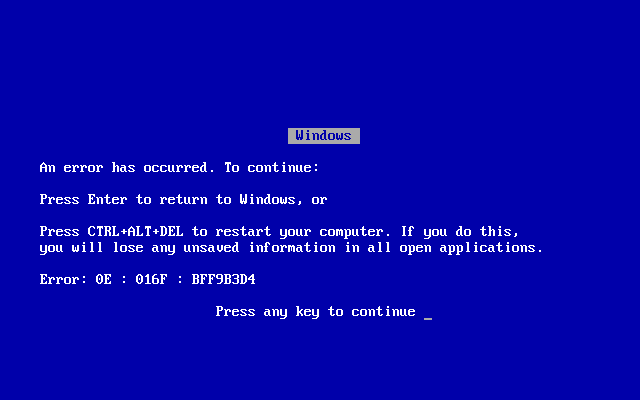
Have you tried turning your government off and back on again?

It's all been very exciting and such, what with people worrying about what it means for the progression of our country.  But I'm getting kind of tired of hearing people (namely, Fox News people) say that no one has really been affected.

First and foremost, we look like a laughing stock.  One of Congress's big jobs is to approve a budget.  In fact, it's pretty much their biggest job.  People forget the power that money has -- setting a budget essentially sets the priorities for the next year.  The fact that political tensions have gotten so high that Congress can't perform its fundamental function speaks volumes about the general illegitimacy of the U.S. system right now.

Contingent Consent.  Maybe you've heard of it.  Chances are you probably haven't.  Contingent consent is a necessary piece in a functional and competitive democratic state.  It's the idea that you will win some elections and lose others, and that whichever side (or sides) loses will agree to live under the laws and rules of the side that won -- with the understanding that in the next election, you have the ability to unseat the other party if you don't like what they've done.

The only way to preserve rule of law under a democratic system is the acceptance of this idea of contingent consent -- the system can't function if you play by the "I lost, so I'm taking my toys and going home" mentality.  Which is exactly what we've got going right now.

Aside from the general "the reputation of the United States as a whole is at stake (compounded with the PRISM fiasco, the invasion of sovereign borders, several unnecessary wars, growing distrust of the U.S. and the West, etc)" issue, there are people being affected.  A friend of mine can't work on his thesis because he can't access the Library of Congress or the National Archives.  Many women and children who receive federal WIC funding will not receive their stipend in time if this isn't sorted out.  National Parks, federal funding for public education, GDP, "nonessential" federal employees, and more all stand to lose out if this shutdown and budget crisis aren't dealt with immediately.

The fact that you got your mail like always today doesn't mean that people aren't hurting.


Frustratedly yours,
Rachel Leigh

Wednesday, September 25, 2013

On Why I Hate the Filibuster

The first thing many of you are probably wondering is why I'm writing this post now, instead of back in June when Wendy Davis was filibustering on the Texas State Senate floor about the anti-abortion bill before the state legislature.

I wish I had a good answer for that.  Partially, because as much as I don't like the filibuster as a tactic, it's because I think Wendy Davis is kind of a badass.  Partially, it's because this is not a non-partisan blog.  And, mostly, it's because I was making the same argument on Facebook and it never crossed my mind to make this post.

First of all, I will note that there are some minor differences between the current Ted Cruz filibuster on the U.S. Senate floor and Davis's filibuster in Texas.  One, Wendy was in Texas, so her actions impacted only the residents of Texas, while Senator Cruz's filibuster aims to impact the entire country and the federal government.  So, yknow, keep the scope of things in mind as we progress here.  Two, the Texas State Senate filibuster rules state that you can only continue to speak as long as you continue to speak on matters directly related to the bill at hand.  This stipulation does not exist for the Senate filibuster, which may proceed (even by reading the phone book) until the speaker 1) voluntarily sits down, leaves, or stops speaking or 2) the Senate reaches a 2/3 vote needed for cloture and ends the debate in spite of the filibuster.  Until then, anything and everything is fair game.

Which brings us to today.  Ted Cruz is filibustering on the Senate floor [last I heard, reading Dr. Seuss books] to delay or prevent a vote on a critical budget measure in an attempt to "defund Obamacare" and the stipulations of the Affordable Care Act which will go into effect tomorrow.

I hate the filibuster as a tactic or procedural rule -- regardless of party affiliation or the issue.

First, it prevents any real, constructive debate on the topic at hand.  Debate is, inherently, a conversation.  And a filibuster is precisely the opposite -- especially when you don't even need to be talking about the bill that's up for a vote.  It is one-sided preaching, sometimes on topic, sometimes not, which does nothing to require either side to provide evidence or support for their side of the argument.

Second, the filibuster is a direct threat to the democratic process.  Senate voting rules were designed for a simple majority.  And, pending Presidential veto, a simple majority is supposed to be all that's needed to pass something.  The filibuster, by requiring a 2/3 vote, effectively raises the threshold for substantive Senate progress to a level even harder to achieve than half-plus-one.  People complain about Congressional inefficiency, but it's even harder to make any moves in any direction when you need not only a majority, but overwhelming support for any measure.

The filibuster is a holdover from very old Parliamentary procedure.  In the early 1800s, the House of Representatives decided it was enough of a bar to productive and timely debate that they removed it in an update of the House debate rules.  It sticks around in the Senate as a fossil from an era where immediate action was both typically unnecessary and more or less impossible -- in a world which is quite the opposite.

Politically yours,
Rachel Leigh

Saturday, July 20, 2013

On the Virginia GOP

Before I head out of Virginia for a little while, I figured a fitting last post in the capitol of the Confederacy would be something along the lines of "What Exactly is Wrong with Virginia Republican Candidates (and do they hear the words that are coming out of their mouths)?"

So the Virginia GOP has given their nods to Gubernatorial and Attorney General candidates.  First on the chopping block is my good friend Ken Cuccinelli, who you may have heard of in his many attempts to restrict women's access to abortion, planned parenthood, and bodily autonomy.  He's a good man, I assure you.  Cuccinelli's most recent move has been to take Virginia's infamous sodomy law (which bans sodomy, oral sex, and, assuming they have kept the full text of the original law, sex with the lights on, and classifies them all as a felony offense) to the Supreme Court.  Now, in 2003, the Supreme Court declared state sodomy laws unconstitutional, on the grounds that, oddly enough, they persecute people whose partners do not have the opposite set of parts required for traditional intercourse, and also because we typically accept that you have a right to privacy and what you do in your own home between consenting adults is your own business.

But not only is Cuccinelli taking this to the Supreme Court, hoping they'll overturn or adjust their ruling in Lawrence v. Texas, but he posted on his campaign site that 90 new sexual predators (because, you know, felony sexual violations, like this one, will get you registered as a sex offender) will come off the sex offender registry.  Because gay sex and pedophilia are totally the same thing and this totally isn't a scare tactic.

Our other WTF of the day comes at the suggestion of one of my readers (you can like the WCS page on facebook and make post suggestions if you'd like).  Virginia's Republican Attorney General candidate is a man named Mark Obenshain, who in 2009 proposed an interesting bill.  This would require women who miscarry to report their miscarriage to the police within 24 hours or face legal penalties.  Now, there is a pro-choice/pro-life angle that one could attack this from, but I'm going to let that go for now and look at it quite simply: miscarriages are often painful and emotionally traumatizing.  Many of the women who experience them were incredibly excited to have a child.  To attempt to force a woman who is already going through this kind of emotional turmoil to compound it by forcing her to talk to the police is inhumane.  And this is the man the Virginia GOP wants in charge of enforcing Virginia laws.

All that being said, I'll be spending the next few weeks in Pennsylvania and North Carolina and will keep you all up to date with my ramblings and happenings.

Frustratedly yours,
Rachel Leigh

Thursday, October 25, 2012

On Career Plans and Congress

I'm a Poli Sci major (as referenced in the post "My Fake Major").  This means that I spend most of my time in classes that focus on how the government runs, domestic and foreign policies, and theories about how states should form/act/etc.  Which means I pay a lot of attention to politics.  And I've realized something...

When you get a Poli Sci major to talk about their future plans, if they have any, you tend to hear: campaign advisor, lobbyist, diplomat, civil servant, lawyer...  One of my friends even wants to go into work in the prison system, because, hey, we'll always have prisons. Very, very rarely does a student go into Political Science with the goal of becoming a politician.  Or maybe it's a few years of studying the system that scares us all out of it.  Who knows really?

But I think it's an interesting indictment on our political system that the students who have devoted their college careers, and potentially their lives, to studying it want nothing to do with it in the end.  In my case, as I think I've probably mentioned before, it's because I think domestic politics gets far too clouded by things that don't really matter.  It also has a lot to do with the fact that I find it sad that people's personal and family lives are dragged through the mud in an attempt to prove they're not suitable for office.

But just imagine how differently our system would operate if the people who spent their lives studying the field were the ones who went into government.  If you didn't have to explain to the average Congressman the difference between debt and a deficit.  If everyone in government knew that states are all constitutionally required to submit a balanced budget - one that requires BOTH cuts in spending and increases in taxes, if necessary.  If the people arguing for state sovereignty knew the thinkers who gave that phrase meaning.

We require our lawyers to pass the Bar Exam.  We have the highest academic expectations of our doctors.  Yet we don't have an educational requirement for the people we let run the country.  And so the people who spend their lives learning how the system works end up going elsewhere - either outside of it, or inside, learning to game the system instead.

Politically Yours,
Rachel Leigh

Tuesday, October 16, 2012

On My Fake Major

It's no secret that I'm a Political Science major -- I blog pretty often about politics (although I do try to keep it non-partisan (...I said "try," people, no writer is without bias!)), and it even says in my bio that I'm an "aspiring political activist."  I am quite proud of my studies and the work I hope to do in the future, and I'm not ashamed of my major.

Which is why I get really annoyed when people treat me like my major isn't real.  I almost feel like I didn't even really choose my field; Political Science chose me.  By the time I came to college, the gravitational pull in that direction was so strong that no one I went to high school with even has to question what I decided to major in.  I chose my major because it's what I'm passionate about, because the work I do for it is good, and because I'm very excited about what doors it may open for me when I graduate.

So let's get down to the nitty-gritty of why people seem to think my major is "fake."

My favorite question, by far, is, "What are you planning to do with that? Become the President?"*  Now, if you're an Actuarial Studies major, an Astrophysicist, or studying Chemistry with plans to take up Pharmacology later in life, feel free to ignore this part of the discussion -- your unemployment rates are literally zero and you are therefore pretty much exempt from this whole issue.  You will always have jobs because your fields are either too depressing, too boring, or too complicated for the vast majority of students, so we will always need people like you!  Go you!  But if you are planning to major in pretty much anything else, you can expect your job prospects to be pretty grim.  Almost every field sees an unemployment rate of around 7%.  Interestingly enough, the unemployment rate for students with Political Science degrees?  6%, according to a study done by the Georgetown University Center on Education and the Workforce**.

Let's face it, there are only so many Fortune 500 companies in the world to run (incidentally, there are 500 of them), which I'm pretty sure means that, even if everyone in charge of every one of those companies either retired or died, there STILL wouldn't be enough available positions for all of the Business School graduates from just my tiny University alone from the last three years.   So I guess that makes your "job prospects" question a moot point.  I appreciate your concern.

The other major (get it?) question I get a lot in relation to my major's legitimacy comes down to the number of units in my major.  My major has a 10 unit class requirement (which equates to about 35-40 credits for all you crazy credit-system students out there), which is, admittedly, on the lower end.

There are a few reasons I think this complaint lacks legitimacy.  First, we're all still required to complete the minimum 32 classes to graduate that everyone else is.  We don't suddenly get to call it a day after a year and a half.  Second, part of the reason the major is so small and flexible is because they encourage us to pick up minors, second majors, research, or study abroad semesters, and they want the major to be flexible enough to accommodate that.  I actually feel bad for some of my friends in the hard sciences or business programs who just don't have the flexibility to go abroad.  Third, and in my opinion, most importantly -- trying to take an entire semester of Political Science courses is crazy.  If your brain doesn't explode from all the readings (which often contradict each other because theories contradict other theories and often those contradict practice), your fingers will probably freeze up and develop early-onset carpal tunnel from all the papers you'll write.***

It's not that I think other majors don't deserve credit -- I absolutely do.  Most students I know work hard and get stressed, and everybody has their own skill sets.  I, for one, am glad my best friend from high school is the Engineering major and I am not, because I would build bridges that would collapse and kill people.  But while most people I know in my field recognize and respect the legitimacy of other majors, it makes me sad that we don't get the same respect in turn.  Our skills are different than yours and our paths and passions took us in a different direction.  Why does that make us any less worthy?

Studiously yours,
Rachel Leigh

* Leaving aside the fact that very few of the Political Science majors I know want to become politicians.  That's a post for another day (one which is currently in the works).
** Source: http://graphicsweb.wsj.com/documents/NILF1111/
*** Shout out to Dr. Dagger and Dr. McDowell for combining to make me write more papers as a first semester freshman than many of my friends will write their entire time in college!

Tuesday, September 11, 2012

On Election Season and Why I'm Glad I Have an Absentee Ballot

Darling readers, as much as it pains me to be out of the country during the first presidential election I can vote in (shout out to the Bucks County Board of Elections and my awesome mother for making sure I still get my absentee ballot!), I do have to say I'm not lamenting missing out on the irritating onslaught of campaign ads.

Don't get me wrong, between the daily emails, the political Facebook posts, and the fact that for some reason the Danes do actually seem to care about the outcome of the American presidential election, I'm still bombarded with campaign slogans and election information (and the occasional request to canvas or come to a rally, but sorry guys, it's hard to do that from Copenhagen -- best of luck though!).  But it's refreshing to get a break from every ad I see on YouTube or TV, or hear on the radio, being a political ad.

But the thing is, I didn't miss it entirely.  Because what they neglect to tell you is that campaign season in the States starts long before the primaries.  In fact, especially for House elections, it's reasonable to say that campaign season never stops.  Even before the campaign ads start airing, the media is full of policy critiques and comments from one side on the actions of the other.

What this means is that our politicians can rarely enter into that lull where they can actually govern as opposed to dancing around like trained monkeys trying to win your approval.  The second-term presidencies are really the only chances politicians get to actually do their jobs without worrying about the ramifications at the polls -- after all, they don't GET another shot.

What I've noticed here, though, is that while campaigning can get a little tough (especially in the UK because politics in the UK are so absurd they're actually funny), once an election has passed and a government has taken over, they're given the chance to DO THEIR JOBS, with the understanding that they may have to pay the price in the next election cycle, but that it won't really be an issue until then.

An outside perspective on American politics is actually kind of refreshing, really.

Absently yours,
Rachel Leigh

Sunday, September 9, 2012

On European Politics and "Bad Words"

Greetings again from across the Atlantic!  After spending the last week gallivanting around southern Denmark and Schleswig-Holstein in Germany, going to lectures taught by former VCU professors who now work in a Belgian think tank, a Fatboy Slim concert, and getting a winter coat, I finally have the chance to sit down and write a little bit.

We had a couple meetings with officials from both the Danish and German governments, which was really eye-opening in a lot of ways.  We met with a woman in the Danish parliament (called the Folketing), and it was truly refreshing to hear a politician who wasn't so afraid to give a direct answer when asked for their position on something -- even something as conflicted as whether Denmark should join the Euro zone (spoiler alert: they totally should, the currency is already tied to the Euro so it's stupid not to).

But because most of European Union and European domestic politics come down to a culture of consensus, I thought the coolest thing was that the word "compromise" and "lobby" weren't bad words.  They weren't things to be afraid of.  Lobbying - pitching the facts and rubbing elbows to make the right friends to assert your political agenda - is just a necessary part of getting things done in a system that isn't strictly majority based.  And they recognize the difference between compromise and rolling over and playing dead.  Especially within the EU, compromising and giving up a little bit of what you want allows you to influence the direction the discussions and decisions take, so maybe you might lose one thing you wanted, but ultimately you come out with the things that were really important.

When the system is less driven by conflict and campaigning, it doesn't become such a bad thing to make some sacrifices for the good of the greater cause.  And that, to me, is cool.

You know what isn't cool, though?  How expensive soda is here.  I'm superthirsty right now and I don't want to walk all the way to Netto for a five dollar can of soda.  Rawr.

Politically yours,
Rachel Leigh