You may have heard by now, but high-ranking aides in the Trump White House are using their
RNC email accounts. This may have you wondering: isn’t this exactly what
everyone wanted to lock Hillary up over? I assume you may be wondering that,
because that’s what’s been all over my newsfeed recently. What you may or may
not be aware of, however, is that aides and Cabinet officials, including former
Secretary of State Colin Powell, did the same thing during the Bush
administration. As did other Cabinet officials under Obama.
So why, then,did Hillary’s matter so much when others’ didn’t?
Spoiler alert: It’s sexism.
More importantly, it’s the pervasive idea that women are inherently duplicitous,
untrustworthy, or unreliable when it comes to the truth. Whether this trend
started with the story of Eve is a question for Biblical scholars to think
about – but it certainly is advanced by that story. Eve tricks Adam into eating
the fruit of the Tree of Knowledge and thus expels them from Eden, damning the
human race for all eternity.
In her essay, “Cassandra Among the Creeps” (also
included in her book Men Explain Things
to Me), Rebecca Solnit uses the story of Cassandra to talk about the
pervasive belief that women lie and men are hurt by it. Cassandra, a character
in the Iliad who plays a part in the
Trojan War, is cursed by Poseidon to see the future – but have no one around
her believe her premonitions. Thus, when she sees visions of Troy burning,
people assume she is mad or lying. From Cassandra, she moves to the (routinely
discredited) claim that rape victims often lie about their assaults (taking a
brief side-trek into Freud, but we’ll forgive that).
So what does Cassandra have to do with Hillary’s emails? Well, if Solnit’s theory about the
myth of the duplicitous woman is to be believed – and I’m inclined to believe
it – then there is far more to fear from a woman who is hiding something than
there is when a man does the same thing. We can arguably believe that a
successful man will know how best to delineate official and unofficial
communications when conducting some official business on another email address
(and deleting some, or yknow, 22 million, of those emails). But we’re
conditioned to believe that successful women must have somehow broken the rules
to get to where they are. That something in the 30,000 missing emails must
implicate her for the shady dealings she had to undertake to get to where she’s
at. Because somehow we can simultaneously believe that women are already equal
while assuming that most successful women have slept or schemed their way to
the top.

This is a blog about things, about thinking about things, about talking about things, and about being as snarky and poignant as I can manage. I hope you enjoy it.
Showing posts with label feminism. Show all posts
Showing posts with label feminism. Show all posts
Thursday, January 26, 2017

Tuesday, January 27, 2015
On Apologizing
I'm not going to talk about Leaning In, or anything like that, but you may have noticed I did not apologize in my last post for not posting more frequently. One of the goals I set for myself in this new year and hopefully for the rest of my life is to stop apologizing for things that don't need apologies for.
Don't get me wrong, I will never stop apologizing when I have done something wrong or hurt someone, especially someone I care about, because it's, y'know, important for creating healthy relationships in life.
But studies have shown, and Pantene has famously commercialized, the fact that women apologize more often than men. This then translates into the perception that women may be more incompetent or less confident, because they apologize more frequently. I know I apologize too much. I have heard it since before I started working, and I have heard it in response to apologizing for things that other people don't consider apology-worthy offenses.
My mother sometimes says that she thinks I learned this habit from her. Maybe it was a part of it, but it was also learning from a young age that more of the things I do, like speaking up when I want to be heard, are seen as bossy or pushy or somehow deserving of an apology.
A study out of the University of Waterloo in Ontario claims that the difference in apologies, when adjusted for the number of times that someone feels like they have committed an offense, doesn't present a gender gap, but that women, on the whole, did apologize more. What this implies, then, is that women perceive having wronged someone in a way which deserves an apology much more frequently than men do, and thus apologize more.
As someone who wants to be taken seriously and not perceived as self-conscious, timid, or incompetent, I have resolved to apologize less. I hope other people will join me on this journey.
Unapologetically yours,
Rachel Leigh
Don't get me wrong, I will never stop apologizing when I have done something wrong or hurt someone, especially someone I care about, because it's, y'know, important for creating healthy relationships in life.
But studies have shown, and Pantene has famously commercialized, the fact that women apologize more often than men. This then translates into the perception that women may be more incompetent or less confident, because they apologize more frequently. I know I apologize too much. I have heard it since before I started working, and I have heard it in response to apologizing for things that other people don't consider apology-worthy offenses.
My mother sometimes says that she thinks I learned this habit from her. Maybe it was a part of it, but it was also learning from a young age that more of the things I do, like speaking up when I want to be heard, are seen as bossy or pushy or somehow deserving of an apology.
A study out of the University of Waterloo in Ontario claims that the difference in apologies, when adjusted for the number of times that someone feels like they have committed an offense, doesn't present a gender gap, but that women, on the whole, did apologize more. What this implies, then, is that women perceive having wronged someone in a way which deserves an apology much more frequently than men do, and thus apologize more.
As someone who wants to be taken seriously and not perceived as self-conscious, timid, or incompetent, I have resolved to apologize less. I hope other people will join me on this journey.
Unapologetically yours,
Rachel Leigh
Wednesday, November 5, 2014
On Street Harassment
Hellooooo beautiful people!
I'm going to leave aside the fact that I realize my blog is in serious need of redesign. Content before form, and the content has been sorely lacking. I apologize for this, and would like to blame it on the amount of writing I do for class as a full-time graduate student, but that's not an excuse. I should always find time for this. I promise, I'll give you all an update on grad student life in the near future.
In a weird way, I'd like to thank the talk I was at this evening by the incredibly inspiring Ta-Nehisi Coates for reminding me about why I need to write -- and not just critical response papers for graduate courses, but down and dirty writing about things that matter both to me and in the larger context.
If you've read anything I've had to say on this blog any time in the last (nearly) five years, you know that there's no way I could make it through the recent street harassment/catcalling dialogue in the aftermath of the "Ten Hours of Walking in NYC as a Woman" video.
I appreciate the criticisms that the fact that the woman in the video was a paid actress and that the editing of the video disproportionately displays men of color doing the catcalling. These are valid and understandable criticisms.
But they do not change the discussion.
I repeat: valid criticisms of the methodology of the video do not change the discussion which ought surround it.
Because while the actress might have been planted, the comments and interactions which occurred throughout the video were not scripted. And the experience of this particular woman, on camera, is not one with which women are unfamiliar.
To hear responses from men about how you should just "ignore it," when ignoring it only prompts further comment and, in multiple cases in the video, being repeatedly followed and harassed, or "stand up for yourself" when women are killed for confronting their harassers seems to show that people don't really understand what's going on.
The issue is the idea that women in public have surrendered themselves to attention, wanted or not, simply by being in public spaces. If you want proof that catcalling isn't the same as "just giving someone a compliment" or "just saying hello," I highly encourage you to check out some of the tweets from #DudesGreetingDudes to see what it looks like when guys say to other guys what men on the street say to women, and how predatory or absurd it begins to sound.
That said: if you are in a position where you feel comfortable and safe confronting your harasser, I encourage you to do so. Their behavior in a public space is unacceptable and should be repeatedly called out.
From a more personal experience, typically if someone actually is just saying hi, or legitimately complimenting me, I am generally unbothered by it, even though I find it annoying to be confronted in a public space. But, for the record, "Hey baby, nice legs (or ass, or tits, etc)" or "You should smile!" or "Damn" are not compliments. They're creepy and unsolicited. And just because I am personally okay with being greeted by strangers, it does not mean that I am always okay with it, or that it is safe to assume that everyone is. Many people are not.
It is also never.
I repeat, never.
Acceptable to touch a stranger (or an acquaintance or anyone) without permission. Not their hair or their butt or anything.
Privately yours,
Rachel Leigh
I'm going to leave aside the fact that I realize my blog is in serious need of redesign. Content before form, and the content has been sorely lacking. I apologize for this, and would like to blame it on the amount of writing I do for class as a full-time graduate student, but that's not an excuse. I should always find time for this. I promise, I'll give you all an update on grad student life in the near future.
In a weird way, I'd like to thank the talk I was at this evening by the incredibly inspiring Ta-Nehisi Coates for reminding me about why I need to write -- and not just critical response papers for graduate courses, but down and dirty writing about things that matter both to me and in the larger context.
If you've read anything I've had to say on this blog any time in the last (nearly) five years, you know that there's no way I could make it through the recent street harassment/catcalling dialogue in the aftermath of the "Ten Hours of Walking in NYC as a Woman" video.
I appreciate the criticisms that the fact that the woman in the video was a paid actress and that the editing of the video disproportionately displays men of color doing the catcalling. These are valid and understandable criticisms.
But they do not change the discussion.
I repeat: valid criticisms of the methodology of the video do not change the discussion which ought surround it.
Because while the actress might have been planted, the comments and interactions which occurred throughout the video were not scripted. And the experience of this particular woman, on camera, is not one with which women are unfamiliar.
To hear responses from men about how you should just "ignore it," when ignoring it only prompts further comment and, in multiple cases in the video, being repeatedly followed and harassed, or "stand up for yourself" when women are killed for confronting their harassers seems to show that people don't really understand what's going on.
The issue is the idea that women in public have surrendered themselves to attention, wanted or not, simply by being in public spaces. If you want proof that catcalling isn't the same as "just giving someone a compliment" or "just saying hello," I highly encourage you to check out some of the tweets from #DudesGreetingDudes to see what it looks like when guys say to other guys what men on the street say to women, and how predatory or absurd it begins to sound.
That said: if you are in a position where you feel comfortable and safe confronting your harasser, I encourage you to do so. Their behavior in a public space is unacceptable and should be repeatedly called out.
From a more personal experience, typically if someone actually is just saying hi, or legitimately complimenting me, I am generally unbothered by it, even though I find it annoying to be confronted in a public space. But, for the record, "Hey baby, nice legs (or ass, or tits, etc)" or "You should smile!" or "Damn" are not compliments. They're creepy and unsolicited. And just because I am personally okay with being greeted by strangers, it does not mean that I am always okay with it, or that it is safe to assume that everyone is. Many people are not.
It is also never.
I repeat, never.
Acceptable to touch a stranger (or an acquaintance or anyone) without permission. Not their hair or their butt or anything.
Privately yours,
Rachel Leigh
Monday, September 29, 2014
On YouTube, Sexual Abuse, and Community Response -- Trigger Warning
Let me first say this: I love YouTube. YouTube is pretty much where I spend most of my free time, checking out new content, new creators, and videos from creators I love.
Which is why the continued reports of sexual abuse by YouTube content creators against their fans, many of whom have been underage, really disheartens me. This community has been so strong partially because there is a level of transparency involved -- we see our favorite creators, get to openly interact with them, give and receive feedback, and there seems to be a level of personal connection which doesn't exist with, say, TV personalities.
But if there's one thing these instances have shown, it's that people in positions of power over their fans will often abuse that power.
On the other hand, YouTubers themselves have created a culture of mutual accountability -- condemning and cataloging the alleged and confirmed cases. Former friends of abusers have come forward and said that they can no longer be friends or involved with known abusers. DFTBA Records has pulled merchandise and support for former creators in light of the scandals.
This has been a community that, unlike many, has made statement after statement that abuse like this has no place in the community and WILL NOT be tolerated. And that gives me hope. Especially in light of the way some communities (here's lookin' at you, NFL) are doubling down on their current stances on abuse. Communities could learn a thing or two about how to handle allegations and cases of abuse, sexual assault, sexual harrassment, and rape from the way these have been handled.
Related: Sam Pepper is a bucket of dicks.
Yours in solidarity,
Rachel Leigh
Which is why the continued reports of sexual abuse by YouTube content creators against their fans, many of whom have been underage, really disheartens me. This community has been so strong partially because there is a level of transparency involved -- we see our favorite creators, get to openly interact with them, give and receive feedback, and there seems to be a level of personal connection which doesn't exist with, say, TV personalities.
But if there's one thing these instances have shown, it's that people in positions of power over their fans will often abuse that power.
On the other hand, YouTubers themselves have created a culture of mutual accountability -- condemning and cataloging the alleged and confirmed cases. Former friends of abusers have come forward and said that they can no longer be friends or involved with known abusers. DFTBA Records has pulled merchandise and support for former creators in light of the scandals.
This has been a community that, unlike many, has made statement after statement that abuse like this has no place in the community and WILL NOT be tolerated. And that gives me hope. Especially in light of the way some communities (here's lookin' at you, NFL) are doubling down on their current stances on abuse. Communities could learn a thing or two about how to handle allegations and cases of abuse, sexual assault, sexual harrassment, and rape from the way these have been handled.
Related: Sam Pepper is a bucket of dicks.
Yours in solidarity,
Rachel Leigh
Thursday, August 14, 2014
On Privilege, Racism, and Ferguson
My heart goes out today to the people of Ferguson, Missouri. I cannot know your pain, but I sympathize with your rage.
I am not a person of color.
I am not one to speak often of privilege, because I feel there are people much better suited to speak about it than me. But I am not a person of color.
It is not my place to take control of your movement or to subsume your anger into my own understanding. I don't have to worry about what would happen if my son or daughter were shot down in a horrifying act of police brutality -- the color of my skin makes that incredibly unlikely. I benefit from systemic racism which says that because I am a white woman, particularly a cisgender college-educated white woman, that I am not a threat.
There are places and times when gender is not a gift. It has often made me afraid to be alone in public settings. But it has never made me fear police brutality. I will not have to raise my kids to fear police profiling or extra, unwarranted attention. I do not have to fear that reaching for my wallet may be confused with reaching for a gun.
The situation is not the same, however, for the black population in America. I cannot say I understand, because I don't. I don't get it. I was not raised with the same fear; I do not face the same threats. My privilege protects me from understanding the pain Michael Brown's mother must be feeling right now. But I am sympathetic to your pain, your cause, and your rage, and I will do my best to use my privilege to help things change.
I am not a person of color.
I am not one to speak often of privilege, because I feel there are people much better suited to speak about it than me. But I am not a person of color.
It is not my place to take control of your movement or to subsume your anger into my own understanding. I don't have to worry about what would happen if my son or daughter were shot down in a horrifying act of police brutality -- the color of my skin makes that incredibly unlikely. I benefit from systemic racism which says that because I am a white woman, particularly a cisgender college-educated white woman, that I am not a threat.
There are places and times when gender is not a gift. It has often made me afraid to be alone in public settings. But it has never made me fear police brutality. I will not have to raise my kids to fear police profiling or extra, unwarranted attention. I do not have to fear that reaching for my wallet may be confused with reaching for a gun.
The situation is not the same, however, for the black population in America. I cannot say I understand, because I don't. I don't get it. I was not raised with the same fear; I do not face the same threats. My privilege protects me from understanding the pain Michael Brown's mother must be feeling right now. But I am sympathetic to your pain, your cause, and your rage, and I will do my best to use my privilege to help things change.
Monday, June 2, 2014
On the Friend Zone
Today we're getting down and dirty with one of my favorite feminist topics: The Friend Zone.
Let me preface this discussion by saying that having unrequited feelings for someone sucks. It's a painful experience, and by no means am I intending to devalue that pain. You have a right to feel hurt over being rejected. You have a right to your own emotions.
Now: let's talk about the Friend Zone.
Inherent in the idea of the Friend Zone is the thought that, after a certain amount of time and effort, you are entitled to some kind of reciprocation from the other person involved. This is not, nor has it ever been, the case. The Friend Zone thinks of people like gumball machines: if I put enough money/time/effort in, I get my reward. I deserve that reward.
Realistically, human relationships are a lot more like slot machines. You can spend all the time and energy and money you have on one and are in no way guaranteed success. In fact, if you are successful, it's a rare and lucky occurrence. When you walk away from a slot machine empty-handed, no one feels bad for you. It's a risk you take when playing the game. When you walk away from a girl empty-handed (or, y'know, with a friend, which I'm not sure why that suddenly became an undesirable thing to have), she's a "bitch" who "led you on."
I don't think I'd be nearly as upset by this concept were it not for the fact that the Friend Zone is a one-way relationship. When a guy has feelings for a girl who just wants to be friends, she's FRIENDZONING him. When a girl has feelings for a guy who just wants to be friends, she's pathetic. Just look at the way these things are portrayed in movies -- think "He's Just Not That Into You" or Bridget Jones or any number of sappy chick flicks. Wanting something with a man who doesn't return those feelings is pathetic. Wanting that with a woman is admirable and "she really should just give him a chance."
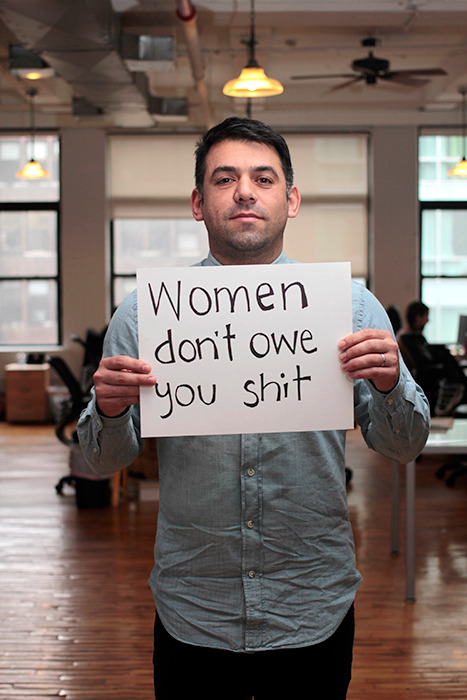
It's no coincidence that I'm talking about this right now. The UCSB attack comes from the same twisted double standard, the same misunderstanding of whether people owe you anything just because you've tried.
This guy says it best:

Let me preface this discussion by saying that having unrequited feelings for someone sucks. It's a painful experience, and by no means am I intending to devalue that pain. You have a right to feel hurt over being rejected. You have a right to your own emotions.
Now: let's talk about the Friend Zone.
Inherent in the idea of the Friend Zone is the thought that, after a certain amount of time and effort, you are entitled to some kind of reciprocation from the other person involved. This is not, nor has it ever been, the case. The Friend Zone thinks of people like gumball machines: if I put enough money/time/effort in, I get my reward. I deserve that reward.
Realistically, human relationships are a lot more like slot machines. You can spend all the time and energy and money you have on one and are in no way guaranteed success. In fact, if you are successful, it's a rare and lucky occurrence. When you walk away from a slot machine empty-handed, no one feels bad for you. It's a risk you take when playing the game. When you walk away from a girl empty-handed (or, y'know, with a friend, which I'm not sure why that suddenly became an undesirable thing to have), she's a "bitch" who "led you on."
I don't think I'd be nearly as upset by this concept were it not for the fact that the Friend Zone is a one-way relationship. When a guy has feelings for a girl who just wants to be friends, she's FRIENDZONING him. When a girl has feelings for a guy who just wants to be friends, she's pathetic. Just look at the way these things are portrayed in movies -- think "He's Just Not That Into You" or Bridget Jones or any number of sappy chick flicks. Wanting something with a man who doesn't return those feelings is pathetic. Wanting that with a woman is admirable and "she really should just give him a chance."
It's no coincidence that I'm talking about this right now. The UCSB attack comes from the same twisted double standard, the same misunderstanding of whether people owe you anything just because you've tried.
This guy says it best:
Angrily yours (full of lady-rage),
Rachel Leigh
Sunday, March 23, 2014
On Angry Feminists (and how more of them should be men)
Why aren't there more men talking about feminism?
This is not nearly as stupid a question as you probably think it is. Listen to Jackson Katz's talk about how violence against women is a men's issue and you might start to wonder too.
People treat feminism as if, in order for the feminists to "win," men have to be destroyed or disempowered. I'm working on my thesis now, and not one of my sources (except the main text I'm interpreting) are written by men...because men don't talk about feminism.
This is something I have never understood. Surely, men have mothers, sisters, friends, lovers, daughters, teachers, spouses, mentors, coworkers who are women. Surely, if the great tragedies of violence against women were directed at these women, they would care. But men won't often speak about how these individual tragedies relate to a culture that facilitates them.
Even if, by some bizarre situation, a man doesn't have any women in his life whom he cares about, he should still be talking about feminism...because sexism and classic gender norms hurt men too. Worldwide, suicide is more prevalent among men, despite a higher rate of mental illness in women, because we tell men they can't seek constructive emotional outlets for their feelings. We treat men like animals and monsters by saying that "boys will be boys" when they hurt each other or others, when some men rape or harrass...we boil "being boys" with being unable to control themselves, like dogs instead of people. We create a culture that defines rigid stereotypes and spaces for men, and while these may be positions of greater power, they are no less de-humanizing or de-individualizing.
Feminism: it's a men's issue too. And people need to start talking about it.
Yours,
Rachel Leigh
This is not nearly as stupid a question as you probably think it is. Listen to Jackson Katz's talk about how violence against women is a men's issue and you might start to wonder too.
Here. I've even included it for you. Nope, no excuses now. Watch it.
People treat feminism as if, in order for the feminists to "win," men have to be destroyed or disempowered. I'm working on my thesis now, and not one of my sources (except the main text I'm interpreting) are written by men...because men don't talk about feminism.
This is something I have never understood. Surely, men have mothers, sisters, friends, lovers, daughters, teachers, spouses, mentors, coworkers who are women. Surely, if the great tragedies of violence against women were directed at these women, they would care. But men won't often speak about how these individual tragedies relate to a culture that facilitates them.
Even if, by some bizarre situation, a man doesn't have any women in his life whom he cares about, he should still be talking about feminism...because sexism and classic gender norms hurt men too. Worldwide, suicide is more prevalent among men, despite a higher rate of mental illness in women, because we tell men they can't seek constructive emotional outlets for their feelings. We treat men like animals and monsters by saying that "boys will be boys" when they hurt each other or others, when some men rape or harrass...we boil "being boys" with being unable to control themselves, like dogs instead of people. We create a culture that defines rigid stereotypes and spaces for men, and while these may be positions of greater power, they are no less de-humanizing or de-individualizing.
Feminism: it's a men's issue too. And people need to start talking about it.
Yours,
Rachel Leigh
Saturday, November 16, 2013
On the Gender Politics of Mental Illness
In case you can't tell, I am a vocal feminist and also really into mental health.
So today I think we're gonna sit down and have a conversation about the gender politics of mental illness.
Depression and anxiety are both, according to estimates, far more prevalent in women than men. In fact, hysteria, a previously-accepted term for what we now typically associate with anxiety disorders, comes from the Greek hysterikos, "of the womb." We typically associate depression and stress with feminine traits. According to the World Health Organization, women are more likely than men to be diagnosed with depression and prescribed psychoactive medications than men, even when two patients score similarly on standardized depression-screening scales.*
Statistically, however, men are 4 times more likely to commit suicide in the United States than women.** Clearly, the perceived difference in mental illness does not account for this massive difference in suicide rates -- if women are always more depressed, why are men more likely to kill themselves?
I think a large part of it comes down to the fact that mental illness and mental distress are seen as typically feminine. As a result, if a woman is experiencing what is considered a typical feminine flaw, they are encouraged to seek help. Men, however, are socialized to avoid discussion of perceived emotional weaknesses, and as such are taught to suppress feelings of depression and anxiety, rather than seeking treatment or coping mechanisms.
Around the world, however, there are also a number of conditions which create situations in which women are, more often than men, exposed to psychologically-triggering experiences that can manifest in mental illness -- social subjugation, sexual assault, and the stresses of childcare and family provision are all highly-correlated with mental illness, and these problems are more prevalent for women, across the spectrum.
Whether the statistics tell the full story or not, there seems to be a significant interplay between traditional gender roles and perceptions of mental illness, and that presents problematically in the representation of both females and those individuals with mental illness.
Yours,
Rachel Leigh
Friday, August 16, 2013
On Yoga Pants and Rape Culture
As someone with "legs for days" (to quote some of my best friends), I always struggled to find shorts that did not violate the school dress code growing up. I think this may have played into my insistence on wearing jeans year-round...I got used to being told my legs needed to be covered.
In the wake of a rash of yoga pants-bans in high schools, I really got to thinking about school dress codes.* And in the wake of a subreddit that asked rapists for "their side of the story," I got to thinking about rape culture and victim blaming.** And thinking about the two together got me...angry.
Let me preface this by saying that there is nothing wrong with telling your son or daughter what they can and cannot wear, especially when they are children. Determining what is and is not appropriate clothing to wear to school, work, or outside the home is a conversation that parents should absolutely have with their children, and is a decision that should be reached based on a child's age, comfort level, body type, economic status, etc. There is nothing wrong with this.
There is also nothing inherently wrong with having a dress code in place which defines what is and is not allowed to be worn on school grounds. Offensive clothing, clothing that violates public decency laws, clothing that is dangerous (I actually totally support flip flop bans) are absolutely a problem in schools. However, the problem comes in when it comes to how these issues are approached, explained to students, and justified in the code of conduct.
Yoga pants or my shorts do not violate a dress code because they are dangerous. They are written into the rules because they are "distracting" and you "don't know how they'll affect the boys." And this is where the problem comes in. Because a society that starts out by telling a twelve-year-old that she cannot wear a particular kind of sweatpants because the shape of her butt is going to force the boys to stop paying attention doesn't stop there.
It becomes the same culture that tells a girl in Steubenville, Ohio that the fact that she was repeatedly raped by two young men was her fault because she should have known that getting drunk around boys was going to put her in a bad situation. It builds into a culture where what she's wearing and the fact that she's drinking mean she's a "whore" who was "asking for it" and should have been charged for underage drinking.***
There is nothing wrong with having a discussion with your kids about what is age-appropriate or appropriate for certain settings when it comes to clothing. But the second you start to contextualize that discussion in the realm of "how will it affect the others," you play into a culture that normalizes sexual assault. Someone's inability to control their own actions is their fault and their problem, no one else's.
Yours,
Rachel Leigh
*http://www.huffingtonpost.com/2013/04/09/leggings-ban-kenilworth-junior-high-california_n_3046043.html
**http://jezebel.com/5929544/rapists-explain-themselves-on-reddit-and-we-should-listen
***http://www.buzzfeed.com/jpmoore/23-people-who-think-the-steubenville-rape-victim-is-to-blame
In the wake of a rash of yoga pants-bans in high schools, I really got to thinking about school dress codes.* And in the wake of a subreddit that asked rapists for "their side of the story," I got to thinking about rape culture and victim blaming.** And thinking about the two together got me...angry.
Let me preface this by saying that there is nothing wrong with telling your son or daughter what they can and cannot wear, especially when they are children. Determining what is and is not appropriate clothing to wear to school, work, or outside the home is a conversation that parents should absolutely have with their children, and is a decision that should be reached based on a child's age, comfort level, body type, economic status, etc. There is nothing wrong with this.
There is also nothing inherently wrong with having a dress code in place which defines what is and is not allowed to be worn on school grounds. Offensive clothing, clothing that violates public decency laws, clothing that is dangerous (I actually totally support flip flop bans) are absolutely a problem in schools. However, the problem comes in when it comes to how these issues are approached, explained to students, and justified in the code of conduct.
Yoga pants or my shorts do not violate a dress code because they are dangerous. They are written into the rules because they are "distracting" and you "don't know how they'll affect the boys." And this is where the problem comes in. Because a society that starts out by telling a twelve-year-old that she cannot wear a particular kind of sweatpants because the shape of her butt is going to force the boys to stop paying attention doesn't stop there.
It becomes the same culture that tells a girl in Steubenville, Ohio that the fact that she was repeatedly raped by two young men was her fault because she should have known that getting drunk around boys was going to put her in a bad situation. It builds into a culture where what she's wearing and the fact that she's drinking mean she's a "whore" who was "asking for it" and should have been charged for underage drinking.***
There is nothing wrong with having a discussion with your kids about what is age-appropriate or appropriate for certain settings when it comes to clothing. But the second you start to contextualize that discussion in the realm of "how will it affect the others," you play into a culture that normalizes sexual assault. Someone's inability to control their own actions is their fault and their problem, no one else's.
Yours,
Rachel Leigh
*http://www.huffingtonpost.com/2013/04/09/leggings-ban-kenilworth-junior-high-california_n_3046043.html
**http://jezebel.com/5929544/rapists-explain-themselves-on-reddit-and-we-should-listen
***http://www.buzzfeed.com/jpmoore/23-people-who-think-the-steubenville-rape-victim-is-to-blame
Thursday, July 11, 2013
On Writers, Women, and the Sexy Lamp Test
Back when Joss Whedon was writing Buffy the Vampire Slayer and Firefly and Dollhouse, he was repeatedly asked questions about why he wrote such strong female characters. His answer, finally, was given in a speech he presented on equality, when he simply stated "Because you're still asking me this question."*
George R.R. Martin, author of the Game of Thrones books, was asked where his inspiration for complex, well-written female characters came from, and he responded that he "always considered women to be people."**
Most feminists and female readers know about the concept of the Bechdel test, developed by Allison Bechdel to determine whether a work gives a fair or even remotely non-sexist depiction of women. The test has three parts: (1) Does this work include at least two female characters?; (2) Do these characters talk to one another?; (3) Is the conversation about something other than men? If you can successfully answer "yes" to all three of those questions, congratulations, there is a chance you have written a remotely non-sexist piece.
However, Kelly Sue Deconnick, a writer and artist for Marvel comics, stated that the Bechdel Test may be expecting too much from us, and has proposed a test wherein "if you can take out a female character and replace her with a sexy lamp, you're a hack."*** My question, then, is when a large number of female characters fail both Bechdel's test and are replacable by a sexy lamp, why are we asking those few writers who write women who actually resemble people why they write them that way?
What does it say about the status quo for female characters when the noteworthy and novel thing is that they're written in three dimensions instead of just as a plot device?
I've often advocated for the need for strong female role models, and those are often hard to find in the real world. But it's worrisome that they are nearly as scarce in the world of fantasy and fiction, and that those writers who create them are often questioned or criticized.
Isn't it time that, instead, we start asking, "I've noticed you've written a hollow shell of a human being and slapped a pair of breasts on her. Why did you do that?" instead?
Curiously Yours,
Rachel Leigh
*http://www.americanrhetoric.com/speeches/josswhedonequalitynow.htm
**http://hbowatch.com/20-minute-interview-with-george-r-r-martin/
***http://www.ign.com/articles/2013/06/20/kelly-sue-deconnick-talks-captain-marvel-pretty-deadly-and-the-sexy-lamp-test
George R.R. Martin, author of the Game of Thrones books, was asked where his inspiration for complex, well-written female characters came from, and he responded that he "always considered women to be people."**
Most feminists and female readers know about the concept of the Bechdel test, developed by Allison Bechdel to determine whether a work gives a fair or even remotely non-sexist depiction of women. The test has three parts: (1) Does this work include at least two female characters?; (2) Do these characters talk to one another?; (3) Is the conversation about something other than men? If you can successfully answer "yes" to all three of those questions, congratulations, there is a chance you have written a remotely non-sexist piece.
However, Kelly Sue Deconnick, a writer and artist for Marvel comics, stated that the Bechdel Test may be expecting too much from us, and has proposed a test wherein "if you can take out a female character and replace her with a sexy lamp, you're a hack."*** My question, then, is when a large number of female characters fail both Bechdel's test and are replacable by a sexy lamp, why are we asking those few writers who write women who actually resemble people why they write them that way?
What does it say about the status quo for female characters when the noteworthy and novel thing is that they're written in three dimensions instead of just as a plot device?
I've often advocated for the need for strong female role models, and those are often hard to find in the real world. But it's worrisome that they are nearly as scarce in the world of fantasy and fiction, and that those writers who create them are often questioned or criticized.
Isn't it time that, instead, we start asking, "I've noticed you've written a hollow shell of a human being and slapped a pair of breasts on her. Why did you do that?" instead?
Curiously Yours,
Rachel Leigh
*http://www.americanrhetoric.com/speeches/josswhedonequalitynow.htm
**http://hbowatch.com/20-minute-interview-with-george-r-r-martin/
***http://www.ign.com/articles/2013/06/20/kelly-sue-deconnick-talks-captain-marvel-pretty-deadly-and-the-sexy-lamp-test
Saturday, April 13, 2013
On Take Back the Night
As I take a break from taking notes on why Paul Feyerabend thinks we should throw method in science out with the bathwater, I want to talk about Tuesday night.
Tuesday, April 9th at UR was Take Back the Night. For those of you who don't know what Take Back the Night is, it began in Philadelphia in the 1970s in response to the problems that women face walking alone at night. Women are taught to fear the dark and the things that go bump within it, and Take Back the Night is intended to empower women and reclaim what has repeatedly been taken away. It is primarily a sexual assault/rape awareness campaign, and at UR involves an open-mic style speaking event and a candlelight vigil.
It is a really moving event, but I think more than anything what I love about Take Back the Night is the extent to which it 1) puts a face to the idea of a survivor of sexual assault and 2) forces you to look at people as whole, complex individuals who have faced things and have proven themselves to be extraordinarily strong in the face of something that breaks a lot of people. I know that I, personally, have this overwhelmingly powerful reaction whenever I see someone now who I have seen speak at TBtN in the past. It is a combination of sympathy, empathy, and respect, sadness for what they have gone through, and pride for the strong and wonderful people they continue to be in spite of it.
I was heartbroken to see the sheer number of women who are a part of my daily campus community who went up to speak about something that no one should have to face and extraordinarily impressed and inspired by the number of strong, brave, beautiful women who refuse to let their rapists, stalkers, abusers, or scars define them.
I am proud to know you. I am proud to fight with you.
Yours,
Rachel Leigh
Tuesday, April 9th at UR was Take Back the Night. For those of you who don't know what Take Back the Night is, it began in Philadelphia in the 1970s in response to the problems that women face walking alone at night. Women are taught to fear the dark and the things that go bump within it, and Take Back the Night is intended to empower women and reclaim what has repeatedly been taken away. It is primarily a sexual assault/rape awareness campaign, and at UR involves an open-mic style speaking event and a candlelight vigil.
It is a really moving event, but I think more than anything what I love about Take Back the Night is the extent to which it 1) puts a face to the idea of a survivor of sexual assault and 2) forces you to look at people as whole, complex individuals who have faced things and have proven themselves to be extraordinarily strong in the face of something that breaks a lot of people. I know that I, personally, have this overwhelmingly powerful reaction whenever I see someone now who I have seen speak at TBtN in the past. It is a combination of sympathy, empathy, and respect, sadness for what they have gone through, and pride for the strong and wonderful people they continue to be in spite of it.
I was heartbroken to see the sheer number of women who are a part of my daily campus community who went up to speak about something that no one should have to face and extraordinarily impressed and inspired by the number of strong, brave, beautiful women who refuse to let their rapists, stalkers, abusers, or scars define them.
I am proud to know you. I am proud to fight with you.
Yours,
Rachel Leigh
Tuesday, February 12, 2013
On My Plans for Valentine's Day
This week is the Vagina Monologues, which in addition to being a great time with an amazing group of women, is one of my favorite times of the year because it allows me the opportunity to make people extraordinarily uncomfortable by yelling at them about vaginas.
Now, the reason I enjoy making people uncomfortable by yelling at them about vaginas is not simply because I like making people uncomfortable. The fact is that I like pointing out the ways in which your discomfort doesn't make sense. The word "vagina," and the legions of college girls yelling about them in the Student Commons, are considered weird or offensive because we are taught from a very young age that vaginas and the things they do and the things they're used for ought to be shameful and secretive. All you need to know to know that is to look at the ways a girl will go out of her way to hide the fact that she's on her period -- which is, y'know, entirely out of our control and completely natural.
So girls are taught that our bits are supposed to be secrets that ought to be kept quiet, out of sight, and out of mind. But while it's weird and disconcerting for women to be tabling about their vaginas (and, more honestly, about the violence which is perpetrated against those people who possess them), it's totally fine for men to be yelling about testicular cancer or to draw penises in public. But people see our weird emoticon-vaginas on our posters and think they're creepy and wrong.
So, yes, I will continue to yell at you, professor who is refusing to make eye contact, about the wonders of vaginas and the things we say about them and the things we don't say about them (the things that lead to illness and violence because we're AFRAID or ashamed to talk about them), because I want to force you to think about why exactly the most quintessential piece of female human anatomy should be seen as creepy or wrong. I mean, yeah, I get that they're all flaps and doo-dads, but I'll keep yelling about them Until the Violence Stops.
Yours in Vagina-Love,
Rachel Leigh
For the record, any one in the area of the University of Richmond, the show is the 13th, 14th, and 15th in the Pier (Tyler Haynes Commons) at 9 pm. You can get tickets, t-shirts, or chocolate vagina lollipops in the Commons every day.
Now, the reason I enjoy making people uncomfortable by yelling at them about vaginas is not simply because I like making people uncomfortable. The fact is that I like pointing out the ways in which your discomfort doesn't make sense. The word "vagina," and the legions of college girls yelling about them in the Student Commons, are considered weird or offensive because we are taught from a very young age that vaginas and the things they do and the things they're used for ought to be shameful and secretive. All you need to know to know that is to look at the ways a girl will go out of her way to hide the fact that she's on her period -- which is, y'know, entirely out of our control and completely natural.
So girls are taught that our bits are supposed to be secrets that ought to be kept quiet, out of sight, and out of mind. But while it's weird and disconcerting for women to be tabling about their vaginas (and, more honestly, about the violence which is perpetrated against those people who possess them), it's totally fine for men to be yelling about testicular cancer or to draw penises in public. But people see our weird emoticon-vaginas on our posters and think they're creepy and wrong.
{( )}
For the record, they look like that. Is that weird?
So, yes, I will continue to yell at you, professor who is refusing to make eye contact, about the wonders of vaginas and the things we say about them and the things we don't say about them (the things that lead to illness and violence because we're AFRAID or ashamed to talk about them), because I want to force you to think about why exactly the most quintessential piece of female human anatomy should be seen as creepy or wrong. I mean, yeah, I get that they're all flaps and doo-dads, but I'll keep yelling about them Until the Violence Stops.
Yours in Vagina-Love,
Rachel Leigh
For the record, any one in the area of the University of Richmond, the show is the 13th, 14th, and 15th in the Pier (Tyler Haynes Commons) at 9 pm. You can get tickets, t-shirts, or chocolate vagina lollipops in the Commons every day.
Monday, November 12, 2012
On The Right to Slut
Four days ago, a blog post surfaced called "What the Right Doesn't Get About Elections." I am not going to link you to it, mostly because I don't want the asshat's blog to get any more traffic than it already has. What I will tell you is that The Guardian, Gawker, and Jezebel have all done response pieces that use actual excerpts from the post, and you should go find those.
Basically, what the post explains is that Romney lost because Barack Obama won the "Slut Vote," young, unmarried women. These young, unmarried women take birth control, get breast exams and cancer screenings from Planned Parenthood, support their own or other women's rights to have dominion over their own uteri, are poor black women, rich white suburban brats, and single mothers. And they want the government to pay for their "right to Slut."
Now, we've talked a bit about Slut Shaming here before, but let me reiterate what it means, despite the fact that it is not the main purpose of this post. Slut shaming is the idea that a person's worth can be inversely correlated with the number of people they have slept with -- that the more partners or pre- or extra-marital encounters a person has, the less they deserve to be treated like a person. This contributes, in large part, to the disgusting societal idea that a woman who is not a virgin cannot really be raped, that she "was asking for it." Slut shaming is a problem. A person's sexuality does not determine their worth. You totally have a Right to Slut, if that is what makes you happy and seems like the right choice for you. You also have a Right to Abstain, if saving yourself until marriage is something that really matters to you. A person's sexuality, regardless of how it coincides with your personal beliefs, does not determine their worth as a person.
What we're really here to discuss today is Mr. "bskillet"s ideas of what defines a slut. He points to women who are young and unmarried, because "older and married women vote Republican." Clearly, every unmarried woman is a slut who wants the government to subsidize her promiscuity. Despite the fact that many unmarried women either abstain or only have a single partner before they marry. But clearly, SLUTS AHOY. He goes on to say that poor, black women voted for Obama because he supports their rights to get government handouts for the babies they kept and have the government pay for the babies they didn't want. The fact that this disgustingly frames all poor, black women as baby-machines that want to do nothing more than have sex and pop out children so the government will pay for them apparently eludes this man. I also wonder if he's ever met a black woman or if he's only heard from Fox News about what they're like. Actually, I'm just going to expand that to all women.
And theeen we get into my favorites: all women who take birth control or go to Planned Parenthood are irresponsible, promiscuous, rich, white brats. The majority of Planned Parenthood's work includes important medical services like breast cancer screenings. Last I checked, tumors don't care whether you're male, female, sexually-active, or celibate. And free breast exams are the best kind of breast exams.
So not all women who go to PP are whores, but of course, why would you take birth control if you weren't slutting it up all over the place? Well, aside from those women who, again, only have one partner but aren't ready to be parents, married women who are still on the pill because, again, they are unready to be parents, and girls who are exercising their perfectly healthy right to control their own sexuality without the risk of pregnancy? Medical necessity. The most common treatment for ovarian cysts? Hormonal therapy - also known as birth control. Debilitating cramps that leave you out of work or school for days? Birth control. Severe migraines? Some doctors will suggest birth control. Abnormal periods? Birth control. Bad acne, hair loss, breast sensitivity? All can be treated with birth control. There's this funny thing about birth control in that it contains large doses of estrogen and other synthesized female hormones -- which means that it's often exactly the right thing to fix whatever lady-problem you might be having. None of these are problems that "putting an aspirin between your knees" is going to fix.
The takeaways here: not all women are sluts, there's nothing wrong even if they are, and the far Right REALLY needs a lesson in how birth control actually works.
Yours (But Still Entirely Mine),
Rachel Leigh, proud member of the apparent "Slut Vote"
Basically, what the post explains is that Romney lost because Barack Obama won the "Slut Vote," young, unmarried women. These young, unmarried women take birth control, get breast exams and cancer screenings from Planned Parenthood, support their own or other women's rights to have dominion over their own uteri, are poor black women, rich white suburban brats, and single mothers. And they want the government to pay for their "right to Slut."
Now, we've talked a bit about Slut Shaming here before, but let me reiterate what it means, despite the fact that it is not the main purpose of this post. Slut shaming is the idea that a person's worth can be inversely correlated with the number of people they have slept with -- that the more partners or pre- or extra-marital encounters a person has, the less they deserve to be treated like a person. This contributes, in large part, to the disgusting societal idea that a woman who is not a virgin cannot really be raped, that she "was asking for it." Slut shaming is a problem. A person's sexuality does not determine their worth. You totally have a Right to Slut, if that is what makes you happy and seems like the right choice for you. You also have a Right to Abstain, if saving yourself until marriage is something that really matters to you. A person's sexuality, regardless of how it coincides with your personal beliefs, does not determine their worth as a person.
What we're really here to discuss today is Mr. "bskillet"s ideas of what defines a slut. He points to women who are young and unmarried, because "older and married women vote Republican." Clearly, every unmarried woman is a slut who wants the government to subsidize her promiscuity. Despite the fact that many unmarried women either abstain or only have a single partner before they marry. But clearly, SLUTS AHOY. He goes on to say that poor, black women voted for Obama because he supports their rights to get government handouts for the babies they kept and have the government pay for the babies they didn't want. The fact that this disgustingly frames all poor, black women as baby-machines that want to do nothing more than have sex and pop out children so the government will pay for them apparently eludes this man. I also wonder if he's ever met a black woman or if he's only heard from Fox News about what they're like. Actually, I'm just going to expand that to all women.
And theeen we get into my favorites: all women who take birth control or go to Planned Parenthood are irresponsible, promiscuous, rich, white brats. The majority of Planned Parenthood's work includes important medical services like breast cancer screenings. Last I checked, tumors don't care whether you're male, female, sexually-active, or celibate. And free breast exams are the best kind of breast exams.
So not all women who go to PP are whores, but of course, why would you take birth control if you weren't slutting it up all over the place? Well, aside from those women who, again, only have one partner but aren't ready to be parents, married women who are still on the pill because, again, they are unready to be parents, and girls who are exercising their perfectly healthy right to control their own sexuality without the risk of pregnancy? Medical necessity. The most common treatment for ovarian cysts? Hormonal therapy - also known as birth control. Debilitating cramps that leave you out of work or school for days? Birth control. Severe migraines? Some doctors will suggest birth control. Abnormal periods? Birth control. Bad acne, hair loss, breast sensitivity? All can be treated with birth control. There's this funny thing about birth control in that it contains large doses of estrogen and other synthesized female hormones -- which means that it's often exactly the right thing to fix whatever lady-problem you might be having. None of these are problems that "putting an aspirin between your knees" is going to fix.
The takeaways here: not all women are sluts, there's nothing wrong even if they are, and the far Right REALLY needs a lesson in how birth control actually works.
Yours (But Still Entirely Mine),
Rachel Leigh, proud member of the apparent "Slut Vote"
Monday, July 30, 2012
On Perspective 2 (or Fighting Real Problems Instead of Making Up New Ones)
This post might very well lose me friends. But I just calls 'em like I sees 'em, and this isn't something I take lightly.
I have never backed down from the idea that I am a feminist -- I'm kind of one of those people of the belief that if you or someone you care about identifies as a woman, than you have no right or sense to not support things that would help make the lives of women everywhere better.
But maybe I haven't been clear on my views towards those people who calls themselves activists who are, in reality, looking for something to complain about. I came across this tumblog that literally blasted everything from meat eaters to a child abuse awareness campaign. The campaign in question won the Gold Lion award at Cannes and depicts the cycle of child abuse, showing each child being abused and eventually growing into their abuser. Actually, you can see them here: http://www.buzzfeed.com/copyranter/powerful-child-abuse-ads. And why was she targeting this campaign? Because the verbal abuse image depicts a woman yelling at her children.
She said the campaign disgusted her -- not the acts portrayed as a part of it -- but the fact that it only depicted a woman yelling, which she thought fueled the "nagging" stereotypes about women. Statistically, it might have made sense to make the abusers in all three images men (each image represented a form of domestic abuse -- sexual, physical, and verbal) because an overwhelming percentage of abuse is male-dominated, but doing so would have been unfair to both men and women because, due to the structure of the campaign, it would eliminate the possibility of women as perpetrators or victims, and they do, in fact, fill both roles, more often than we'd like to believe. And, unfortunately, women are far more likely to perpetrate verbal abuse than any other kind of domestic abuse -- and would it really have been better for the global image of women to have the only woman in the campaign be a sexual predator or a violent monster? Or simply to put a woman as a passive victim?
This is just one case, among many, I'm afraid, where people get so caught up in the politics of activism that they forget what's actually important. This campaign should disgust you, but not for it's content. What it depicts, and the fact that child abuse is still a prevalent issue in America, one that's still not talked about because it's taboo, which creates a self-perpetuating cycle of violence as children who feel mistreated grow up to mistreat others. Your need to be confrontational, to take an issue with everyone just so you have something to say -- has made you blind to the real issue, which makes you unable to do anything to stop it.
So until you start complaining about the real issues and stop letting the small details distract you from the problem at hand, I am still going to take issue with the way you handle things like this. Your loss of perspective is terrifying.
(infinitesimally) yours,
Rachel Leigh
I have never backed down from the idea that I am a feminist -- I'm kind of one of those people of the belief that if you or someone you care about identifies as a woman, than you have no right or sense to not support things that would help make the lives of women everywhere better.
But maybe I haven't been clear on my views towards those people who calls themselves activists who are, in reality, looking for something to complain about. I came across this tumblog that literally blasted everything from meat eaters to a child abuse awareness campaign. The campaign in question won the Gold Lion award at Cannes and depicts the cycle of child abuse, showing each child being abused and eventually growing into their abuser. Actually, you can see them here: http://www.buzzfeed.com/copyranter/powerful-child-abuse-ads. And why was she targeting this campaign? Because the verbal abuse image depicts a woman yelling at her children.
She said the campaign disgusted her -- not the acts portrayed as a part of it -- but the fact that it only depicted a woman yelling, which she thought fueled the "nagging" stereotypes about women. Statistically, it might have made sense to make the abusers in all three images men (each image represented a form of domestic abuse -- sexual, physical, and verbal) because an overwhelming percentage of abuse is male-dominated, but doing so would have been unfair to both men and women because, due to the structure of the campaign, it would eliminate the possibility of women as perpetrators or victims, and they do, in fact, fill both roles, more often than we'd like to believe. And, unfortunately, women are far more likely to perpetrate verbal abuse than any other kind of domestic abuse -- and would it really have been better for the global image of women to have the only woman in the campaign be a sexual predator or a violent monster? Or simply to put a woman as a passive victim?
This is just one case, among many, I'm afraid, where people get so caught up in the politics of activism that they forget what's actually important. This campaign should disgust you, but not for it's content. What it depicts, and the fact that child abuse is still a prevalent issue in America, one that's still not talked about because it's taboo, which creates a self-perpetuating cycle of violence as children who feel mistreated grow up to mistreat others. Your need to be confrontational, to take an issue with everyone just so you have something to say -- has made you blind to the real issue, which makes you unable to do anything to stop it.
So until you start complaining about the real issues and stop letting the small details distract you from the problem at hand, I am still going to take issue with the way you handle things like this. Your loss of perspective is terrifying.
(infinitesimally) yours,
Rachel Leigh
Monday, April 2, 2012
So I may have just left this discussion called "The Faces of Feminism," which was this talk about the definition of feminism and people's experiences with feminism in their everyday lives. And by "may have," I definitely mean "did." I almost feel like I need to be apologetic when I get serious on this blog, because it seems like most of my darling readers prefer when I'm just talking about something completely ridiculous. Honestly, those are more fun to write.
But anyway, I think what stood out to me the most was this idea that there are so many different personal definitions of feminism (and, as a result, so many different kinds of feminists), and that this really stems from the fact that the ways people come to identify as feminist are all actually pretty personal and unique journeys.
If you remember (which I wouldn't blame you if you didn't...some days I don't remember what I ate for breakfast (spoiler alert: I usually sleep through it)), I did a post way back when I started this blog about why I self-identify as a Democrat. I guess this is kind of my reasons for identifying as a feminist? We'll see.
I'm sure my story begins somewhere along the lines with my beliefs about sexual and domestic violence. The two for me are completely inseparable, and I think, to a large extent, that's really what shapes my personal views of feminism. It also doesn't help that I'm a philosophy minor and an absolute freak about ethical philosophy. I think my views on pretty much everything are inextricably tied to this idea that people are autonomous, unique, and incomprehensible, and that these characteristics alone make you deserving of being treated like a human being and no less than anyone else. I'm a feminist, honestly, because I think no one has a right to make anyone an object, for any reason.
I'm not even sure how to feel about the idea of the word "feminism." I think maybe it scares people off? Honestly, I would never deny being a feminist, but I more often identify as an ethicist than a feminist because, for me, it's not about gender, or race, or sexual orientation, or socioeconomic status, because those are all just (to some extent) arbitrary and artificial categories that are super-imposed over the larger issue and, honestly, cloud it a lot of the time. You have a right to your body, to your opinion, to earn fair compensation for your work, to speak and act freely, to love and be loved as you see fit not in virtue of how you identify but merely on the grounds that you're human, and that being human means that there are things about you which no one else can ever fully understand, control, or consume. It's not about being different...or even the same...it's about not attempting to categorize the things you can't ever fully understand, and not being able to give or deny rights to someone on the grounds of the things you don't understand.
adjfkldjfkljdklfj,
Rachel Leigh
But anyway, I think what stood out to me the most was this idea that there are so many different personal definitions of feminism (and, as a result, so many different kinds of feminists), and that this really stems from the fact that the ways people come to identify as feminist are all actually pretty personal and unique journeys.
If you remember (which I wouldn't blame you if you didn't...some days I don't remember what I ate for breakfast (spoiler alert: I usually sleep through it)), I did a post way back when I started this blog about why I self-identify as a Democrat. I guess this is kind of my reasons for identifying as a feminist? We'll see.
I'm sure my story begins somewhere along the lines with my beliefs about sexual and domestic violence. The two for me are completely inseparable, and I think, to a large extent, that's really what shapes my personal views of feminism. It also doesn't help that I'm a philosophy minor and an absolute freak about ethical philosophy. I think my views on pretty much everything are inextricably tied to this idea that people are autonomous, unique, and incomprehensible, and that these characteristics alone make you deserving of being treated like a human being and no less than anyone else. I'm a feminist, honestly, because I think no one has a right to make anyone an object, for any reason.
I'm not even sure how to feel about the idea of the word "feminism." I think maybe it scares people off? Honestly, I would never deny being a feminist, but I more often identify as an ethicist than a feminist because, for me, it's not about gender, or race, or sexual orientation, or socioeconomic status, because those are all just (to some extent) arbitrary and artificial categories that are super-imposed over the larger issue and, honestly, cloud it a lot of the time. You have a right to your body, to your opinion, to earn fair compensation for your work, to speak and act freely, to love and be loved as you see fit not in virtue of how you identify but merely on the grounds that you're human, and that being human means that there are things about you which no one else can ever fully understand, control, or consume. It's not about being different...or even the same...it's about not attempting to categorize the things you can't ever fully understand, and not being able to give or deny rights to someone on the grounds of the things you don't understand.
adjfkldjfkljdklfj,
Rachel Leigh
Thursday, March 8, 2012
On This Little Thing Called "Slut-Shaming"
Sub-title: "Why Rush Limbaugh is Still a Big, Fat Idiot"
I'm sure you've all heard about Rush Limbaugh and Sandra Fluke. If you haven't, it basically boils down to "Fat, old white guy with a radio show calls a Georgetown Law Student a slut and a prostitute because she wants government health care to cover contraception and therefore, in his mind, wants the government and tax payers to pay for her to have sex."

This guy.
Leaving out the fact that Rush clearly doesn't understand how birth control works or the plethora of reasons outside of sexual activity that a woman might be using birth control (in a Congressional hearing, Fluke cited her friend who is on the pill to treat ovarian cysts), there's another issue at hand here.
Let's talk briefly about something called "slut shaming." Because really, that's what Rush is doing here. Slut shaming is the idea that a woman can be judged as a person in virtue of whether or not, and the extent to which, she is sexually active. It directly correlates the value of a woman with whether she is sexually active and ties her into a system that my spiritual guide, the late John Hughes, describes as a "double-edged sword."

"Well, if you say you haven't, you're a prude. If you say you have you're a slut. It's a trap. You want to but you can't, and when you do you wish you didn't, right"
The idea that a woman can be judged for her sexuality relates back to a culture that believes that a woman who isn't a virgin can't be raped, or that a woman who's sexually active in her own right is "asking for it." And Rush, your comments -- your idiotic comments which equate the desire to have a medical expense covered by your insurance policy (which I know is a horrifying concept) with prostitution and a foray into internet porn -- contribute to this horrible excuse for a justification. So, congrats. You're an ass.
Fumingly yours,
Rachel Leigh
I'm sure you've all heard about Rush Limbaugh and Sandra Fluke. If you haven't, it basically boils down to "Fat, old white guy with a radio show calls a Georgetown Law Student a slut and a prostitute because she wants government health care to cover contraception and therefore, in his mind, wants the government and tax payers to pay for her to have sex."
This guy.
Leaving out the fact that Rush clearly doesn't understand how birth control works or the plethora of reasons outside of sexual activity that a woman might be using birth control (in a Congressional hearing, Fluke cited her friend who is on the pill to treat ovarian cysts), there's another issue at hand here.
Let's talk briefly about something called "slut shaming." Because really, that's what Rush is doing here. Slut shaming is the idea that a woman can be judged as a person in virtue of whether or not, and the extent to which, she is sexually active. It directly correlates the value of a woman with whether she is sexually active and ties her into a system that my spiritual guide, the late John Hughes, describes as a "double-edged sword."

"Well, if you say you haven't, you're a prude. If you say you have you're a slut. It's a trap. You want to but you can't, and when you do you wish you didn't, right"
The idea that a woman can be judged for her sexuality relates back to a culture that believes that a woman who isn't a virgin can't be raped, or that a woman who's sexually active in her own right is "asking for it." And Rush, your comments -- your idiotic comments which equate the desire to have a medical expense covered by your insurance policy (which I know is a horrifying concept) with prostitution and a foray into internet porn -- contribute to this horrible excuse for a justification. So, congrats. You're an ass.
Fumingly yours,
Rachel Leigh
Subscribe to:
Posts (Atom)