Hellooooo beautiful people!
I'm going to leave aside the fact that I realize my blog is in serious need of redesign. Content before form, and the content has been sorely lacking. I apologize for this, and would like to blame it on the amount of writing I do for class as a full-time graduate student, but that's not an excuse. I should always find time for this. I promise, I'll give you all an update on grad student life in the near future.
In a weird way, I'd like to thank the talk I was at this evening by the incredibly inspiring Ta-Nehisi Coates for reminding me about why I need to write -- and not just critical response papers for graduate courses, but down and dirty writing about things that matter both to me and in the larger context.
If you've read anything I've had to say on this blog any time in the last (nearly) five years, you know that there's no way I could make it through the recent street harassment/catcalling dialogue in the aftermath of the "Ten Hours of Walking in NYC as a Woman" video.
I appreciate the criticisms that the fact that the woman in the video was a paid actress and that the editing of the video disproportionately displays men of color doing the catcalling. These are valid and understandable criticisms.
But they do not change the discussion.
I repeat: valid criticisms of the methodology of the video do not change the discussion which ought surround it.
Because while the actress might have been planted, the comments and interactions which occurred throughout the video were not scripted. And the experience of this particular woman, on camera, is not one with which women are unfamiliar.
To hear responses from men about how you should just "ignore it," when ignoring it only prompts further comment and, in multiple cases in the video, being repeatedly followed and harassed, or "stand up for yourself" when women are killed for confronting their harassers seems to show that people don't really understand what's going on.
The issue is the idea that women in public have surrendered themselves to attention, wanted or not, simply by being in public spaces. If you want proof that catcalling isn't the same as "just giving someone a compliment" or "just saying hello," I highly encourage you to check out some of the tweets from #DudesGreetingDudes to see what it looks like when guys say to other guys what men on the street say to women, and how predatory or absurd it begins to sound.
That said: if you are in a position where you feel comfortable and safe confronting your harasser, I encourage you to do so. Their behavior in a public space is unacceptable and should be repeatedly called out.
From a more personal experience, typically if someone actually is just saying hi, or legitimately complimenting me, I am generally unbothered by it, even though I find it annoying to be confronted in a public space. But, for the record, "Hey baby, nice legs (or ass, or tits, etc)" or "You should smile!" or "Damn" are not compliments. They're creepy and unsolicited. And just because I am personally okay with being greeted by strangers, it does not mean that I am always okay with it, or that it is safe to assume that everyone is. Many people are not.
It is also never.
I repeat, never.
Acceptable to touch a stranger (or an acquaintance or anyone) without permission. Not their hair or their butt or anything.
Privately yours,
Rachel Leigh

This is a blog about things, about thinking about things, about talking about things, and about being as snarky and poignant as I can manage. I hope you enjoy it.
Wednesday, November 5, 2014

Monday, September 29, 2014
On YouTube, Sexual Abuse, and Community Response -- Trigger Warning
Let me first say this: I love YouTube. YouTube is pretty much where I spend most of my free time, checking out new content, new creators, and videos from creators I love.
Which is why the continued reports of sexual abuse by YouTube content creators against their fans, many of whom have been underage, really disheartens me. This community has been so strong partially because there is a level of transparency involved -- we see our favorite creators, get to openly interact with them, give and receive feedback, and there seems to be a level of personal connection which doesn't exist with, say, TV personalities.
But if there's one thing these instances have shown, it's that people in positions of power over their fans will often abuse that power.
On the other hand, YouTubers themselves have created a culture of mutual accountability -- condemning and cataloging the alleged and confirmed cases. Former friends of abusers have come forward and said that they can no longer be friends or involved with known abusers. DFTBA Records has pulled merchandise and support for former creators in light of the scandals.
This has been a community that, unlike many, has made statement after statement that abuse like this has no place in the community and WILL NOT be tolerated. And that gives me hope. Especially in light of the way some communities (here's lookin' at you, NFL) are doubling down on their current stances on abuse. Communities could learn a thing or two about how to handle allegations and cases of abuse, sexual assault, sexual harrassment, and rape from the way these have been handled.
Related: Sam Pepper is a bucket of dicks.
Yours in solidarity,
Rachel Leigh
Which is why the continued reports of sexual abuse by YouTube content creators against their fans, many of whom have been underage, really disheartens me. This community has been so strong partially because there is a level of transparency involved -- we see our favorite creators, get to openly interact with them, give and receive feedback, and there seems to be a level of personal connection which doesn't exist with, say, TV personalities.
But if there's one thing these instances have shown, it's that people in positions of power over their fans will often abuse that power.
On the other hand, YouTubers themselves have created a culture of mutual accountability -- condemning and cataloging the alleged and confirmed cases. Former friends of abusers have come forward and said that they can no longer be friends or involved with known abusers. DFTBA Records has pulled merchandise and support for former creators in light of the scandals.
This has been a community that, unlike many, has made statement after statement that abuse like this has no place in the community and WILL NOT be tolerated. And that gives me hope. Especially in light of the way some communities (here's lookin' at you, NFL) are doubling down on their current stances on abuse. Communities could learn a thing or two about how to handle allegations and cases of abuse, sexual assault, sexual harrassment, and rape from the way these have been handled.
Related: Sam Pepper is a bucket of dicks.
Yours in solidarity,
Rachel Leigh
Sunday, August 24, 2014
On Grammar and Tone
This post is probably going to come across as a little silly. And also SUPER NERDY. Bear with me.
I hate exclamation points.
!
Look at it. It's hideous. It's so ostentatious.
This might seem strange to some of you who have interacted with me in person, since I am typically a pretty enthusiastic person. I have absolutely no problem with exclamations in verbal speech. You have every right to your enthusiasm.
But I find exclamation points in the written word extremely irritating. To me, they're kind of the
(sarcasm font, once we figure out how to do that) of enthusiasm. Realistically, if you are properly excited about something, the words you use should convey that all on their own. Instead, ending sentences, especially in formal writing, with exclamation points comes across as...half-hearted. Look at me! See how excited I am! Even though no other part of what I'm saying conveys any sense of excitement! I'm using exclamation points because they're a shortcut to fun!
Now, I think they're fitting in some circumstances. The difference between "Happy Birthday." and "Happy Birthday!" when relying solely on non-verbal cues can be huge, since most people interpret the first as rather flat and unexcited. However, when not operating solely on brevity, one shouldn't need !!!!!! to convince them that "Happy Birthday. I hope it is every bit as wonderful and joyful as you deserve." is happy, enthusiastic, and sincere.
Punctuation matters in setting a tone in writing. But the fact is that, too often, it is a short-hand for actual verbal expression.
Also, people who overuse exclamation points are typically just way too happy for my tastes and probably need to get rained on. Sorry about it.
Unenthusiastically yours,
Rachel Leigh
I hate exclamation points.
!
Look at it. It's hideous. It's so ostentatious.
This might seem strange to some of you who have interacted with me in person, since I am typically a pretty enthusiastic person. I have absolutely no problem with exclamations in verbal speech. You have every right to your enthusiasm.
But I find exclamation points in the written word extremely irritating. To me, they're kind of the
(sarcasm font, once we figure out how to do that) of enthusiasm. Realistically, if you are properly excited about something, the words you use should convey that all on their own. Instead, ending sentences, especially in formal writing, with exclamation points comes across as...half-hearted. Look at me! See how excited I am! Even though no other part of what I'm saying conveys any sense of excitement! I'm using exclamation points because they're a shortcut to fun!
Now, I think they're fitting in some circumstances. The difference between "Happy Birthday." and "Happy Birthday!" when relying solely on non-verbal cues can be huge, since most people interpret the first as rather flat and unexcited. However, when not operating solely on brevity, one shouldn't need !!!!!! to convince them that "Happy Birthday. I hope it is every bit as wonderful and joyful as you deserve." is happy, enthusiastic, and sincere.
Punctuation matters in setting a tone in writing. But the fact is that, too often, it is a short-hand for actual verbal expression.
Also, people who overuse exclamation points are typically just way too happy for my tastes and probably need to get rained on. Sorry about it.
Unenthusiastically yours,
Rachel Leigh
Thursday, August 14, 2014
On Privilege, Racism, and Ferguson
My heart goes out today to the people of Ferguson, Missouri. I cannot know your pain, but I sympathize with your rage.
I am not a person of color.
I am not one to speak often of privilege, because I feel there are people much better suited to speak about it than me. But I am not a person of color.
It is not my place to take control of your movement or to subsume your anger into my own understanding. I don't have to worry about what would happen if my son or daughter were shot down in a horrifying act of police brutality -- the color of my skin makes that incredibly unlikely. I benefit from systemic racism which says that because I am a white woman, particularly a cisgender college-educated white woman, that I am not a threat.
There are places and times when gender is not a gift. It has often made me afraid to be alone in public settings. But it has never made me fear police brutality. I will not have to raise my kids to fear police profiling or extra, unwarranted attention. I do not have to fear that reaching for my wallet may be confused with reaching for a gun.
The situation is not the same, however, for the black population in America. I cannot say I understand, because I don't. I don't get it. I was not raised with the same fear; I do not face the same threats. My privilege protects me from understanding the pain Michael Brown's mother must be feeling right now. But I am sympathetic to your pain, your cause, and your rage, and I will do my best to use my privilege to help things change.
I am not a person of color.
I am not one to speak often of privilege, because I feel there are people much better suited to speak about it than me. But I am not a person of color.
It is not my place to take control of your movement or to subsume your anger into my own understanding. I don't have to worry about what would happen if my son or daughter were shot down in a horrifying act of police brutality -- the color of my skin makes that incredibly unlikely. I benefit from systemic racism which says that because I am a white woman, particularly a cisgender college-educated white woman, that I am not a threat.
There are places and times when gender is not a gift. It has often made me afraid to be alone in public settings. But it has never made me fear police brutality. I will not have to raise my kids to fear police profiling or extra, unwarranted attention. I do not have to fear that reaching for my wallet may be confused with reaching for a gun.
The situation is not the same, however, for the black population in America. I cannot say I understand, because I don't. I don't get it. I was not raised with the same fear; I do not face the same threats. My privilege protects me from understanding the pain Michael Brown's mother must be feeling right now. But I am sympathetic to your pain, your cause, and your rage, and I will do my best to use my privilege to help things change.
Sunday, August 3, 2014
Esther Day
It's been nearly two months since I last posted something.
And I feel bad about that.
But today is Esther Day, and I think that's a suitable reason to break my silence.
Esther Day is a day that is named after Esther Grace Earl. It is also her birthday. Several years ago, Esther told John and Hank Green that she wanted her birthday to be a day when people celebrate non-romantic love (love between friends, familial love, all kinds of not-romcom love). She also wanted it to be the one day that John and Hank tell each other that they love each other.
I say "wanted" because Esther passed away after a battle with thyroid cancer. Esther Day is her legacy.
It's kind of cool to think there's a day devoted to non-romantic love, because romantic love monopolizes so much of our attention, that somehow the other forms of love are made to seem less valid or less worthy. And they're not. They're a hugely important part of what makes us unique and functional human beings -- the capacity to love and be loved in return, especially in familial and platonic fashions.
So Happy Esther Day. I love you all. Please take the time to tell the people YOU love that you love them.
Don't Forget to be Awesome.
And I feel bad about that.
But today is Esther Day, and I think that's a suitable reason to break my silence.
Esther Day is a day that is named after Esther Grace Earl. It is also her birthday. Several years ago, Esther told John and Hank Green that she wanted her birthday to be a day when people celebrate non-romantic love (love between friends, familial love, all kinds of not-romcom love). She also wanted it to be the one day that John and Hank tell each other that they love each other.
I say "wanted" because Esther passed away after a battle with thyroid cancer. Esther Day is her legacy.
It's kind of cool to think there's a day devoted to non-romantic love, because romantic love monopolizes so much of our attention, that somehow the other forms of love are made to seem less valid or less worthy. And they're not. They're a hugely important part of what makes us unique and functional human beings -- the capacity to love and be loved in return, especially in familial and platonic fashions.
So Happy Esther Day. I love you all. Please take the time to tell the people YOU love that you love them.
Don't Forget to be Awesome.
Monday, June 2, 2014
On the Friend Zone
Today we're getting down and dirty with one of my favorite feminist topics: The Friend Zone.
Let me preface this discussion by saying that having unrequited feelings for someone sucks. It's a painful experience, and by no means am I intending to devalue that pain. You have a right to feel hurt over being rejected. You have a right to your own emotions.
Now: let's talk about the Friend Zone.
Inherent in the idea of the Friend Zone is the thought that, after a certain amount of time and effort, you are entitled to some kind of reciprocation from the other person involved. This is not, nor has it ever been, the case. The Friend Zone thinks of people like gumball machines: if I put enough money/time/effort in, I get my reward. I deserve that reward.
Realistically, human relationships are a lot more like slot machines. You can spend all the time and energy and money you have on one and are in no way guaranteed success. In fact, if you are successful, it's a rare and lucky occurrence. When you walk away from a slot machine empty-handed, no one feels bad for you. It's a risk you take when playing the game. When you walk away from a girl empty-handed (or, y'know, with a friend, which I'm not sure why that suddenly became an undesirable thing to have), she's a "bitch" who "led you on."
I don't think I'd be nearly as upset by this concept were it not for the fact that the Friend Zone is a one-way relationship. When a guy has feelings for a girl who just wants to be friends, she's FRIENDZONING him. When a girl has feelings for a guy who just wants to be friends, she's pathetic. Just look at the way these things are portrayed in movies -- think "He's Just Not That Into You" or Bridget Jones or any number of sappy chick flicks. Wanting something with a man who doesn't return those feelings is pathetic. Wanting that with a woman is admirable and "she really should just give him a chance."
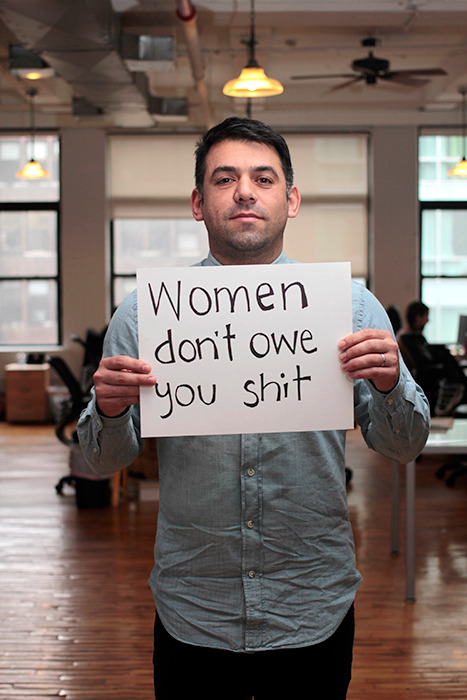
It's no coincidence that I'm talking about this right now. The UCSB attack comes from the same twisted double standard, the same misunderstanding of whether people owe you anything just because you've tried.
This guy says it best:

Let me preface this discussion by saying that having unrequited feelings for someone sucks. It's a painful experience, and by no means am I intending to devalue that pain. You have a right to feel hurt over being rejected. You have a right to your own emotions.
Now: let's talk about the Friend Zone.
Inherent in the idea of the Friend Zone is the thought that, after a certain amount of time and effort, you are entitled to some kind of reciprocation from the other person involved. This is not, nor has it ever been, the case. The Friend Zone thinks of people like gumball machines: if I put enough money/time/effort in, I get my reward. I deserve that reward.
Realistically, human relationships are a lot more like slot machines. You can spend all the time and energy and money you have on one and are in no way guaranteed success. In fact, if you are successful, it's a rare and lucky occurrence. When you walk away from a slot machine empty-handed, no one feels bad for you. It's a risk you take when playing the game. When you walk away from a girl empty-handed (or, y'know, with a friend, which I'm not sure why that suddenly became an undesirable thing to have), she's a "bitch" who "led you on."
I don't think I'd be nearly as upset by this concept were it not for the fact that the Friend Zone is a one-way relationship. When a guy has feelings for a girl who just wants to be friends, she's FRIENDZONING him. When a girl has feelings for a guy who just wants to be friends, she's pathetic. Just look at the way these things are portrayed in movies -- think "He's Just Not That Into You" or Bridget Jones or any number of sappy chick flicks. Wanting something with a man who doesn't return those feelings is pathetic. Wanting that with a woman is admirable and "she really should just give him a chance."
It's no coincidence that I'm talking about this right now. The UCSB attack comes from the same twisted double standard, the same misunderstanding of whether people owe you anything just because you've tried.
This guy says it best:
Angrily yours (full of lady-rage),
Rachel Leigh
Wednesday, April 9, 2014
On Anti-Vaccination Parents
I very well might lose some friends over this one.
We need to talk about vaccines. We, in particular, need to talk about anti-vaccination parents.
When you refuse to vaccinate your child, you show either a complete misunderstanding of modern medicine or a willful ignorance. Because vaccines save lives by protecting children against preventable diseases.
There will be people who tell you that the MMR vaccine causes autism. What they probably won't tell you is that the MMR vaccine is administered for the first time at around a year to a year and a half: roughly the same time that autism begins to noticeably manifest in children, regardless of whether they have gone through vaccinations. This is partially because most recognizable signs of autism can only manifest as your child starts to develop social, oral, and motor skills. They also leave out the part where the only study to ever draw the conclusion that autism and vaccines are linked had his medical license revoked for scientific misconduct.
There will be people who will tell you that vaccines aren't tested well, but as this article will tell you, or rather demonstrate through the copious studies to which it links, this is absolutely untrue.
I understand that being a parent and looking at the risks of certain things can make these kinds of decisions terrifying. Side effects are rare, and typically mild, but what if your child is that one case where they aren't? It's a tough place to navigate.
But realistically, when you choose not to vaccinate your children, you put other people at risk. Non-vaccinated populations can allow for viruses to mutate so that the vaccines are no longer as effective. Non-vaccinated populations put the small portion of the population that can't be vaccinated (because they're too young or have allergies or other health complications) at risk. Many of these childhood diseases are survivable, but they can also be permanently damaging or even fatal in far more cases than the cases of severe negative reactions to vaccines.
It's not just about your kids, sadly. It's about everybody's kids. And when you choose not to vaccinate because Jenny McCarthy says it causes autism, you put everyone at risk.
We need to talk about vaccines. We, in particular, need to talk about anti-vaccination parents.
When you refuse to vaccinate your child, you show either a complete misunderstanding of modern medicine or a willful ignorance. Because vaccines save lives by protecting children against preventable diseases.
There will be people who tell you that the MMR vaccine causes autism. What they probably won't tell you is that the MMR vaccine is administered for the first time at around a year to a year and a half: roughly the same time that autism begins to noticeably manifest in children, regardless of whether they have gone through vaccinations. This is partially because most recognizable signs of autism can only manifest as your child starts to develop social, oral, and motor skills. They also leave out the part where the only study to ever draw the conclusion that autism and vaccines are linked had his medical license revoked for scientific misconduct.
There will be people who will tell you that vaccines aren't tested well, but as this article will tell you, or rather demonstrate through the copious studies to which it links, this is absolutely untrue.
I understand that being a parent and looking at the risks of certain things can make these kinds of decisions terrifying. Side effects are rare, and typically mild, but what if your child is that one case where they aren't? It's a tough place to navigate.
But realistically, when you choose not to vaccinate your children, you put other people at risk. Non-vaccinated populations can allow for viruses to mutate so that the vaccines are no longer as effective. Non-vaccinated populations put the small portion of the population that can't be vaccinated (because they're too young or have allergies or other health complications) at risk. Many of these childhood diseases are survivable, but they can also be permanently damaging or even fatal in far more cases than the cases of severe negative reactions to vaccines.
It's not just about your kids, sadly. It's about everybody's kids. And when you choose not to vaccinate because Jenny McCarthy says it causes autism, you put everyone at risk.
Saturday, April 5, 2014
Hey y'all.
If you want to see more of what I've been doing recently (which might explain why I haven't been blogging on here much this semester), I've got some posts up on other sites, and am currently running another blog as a class project.
You can check them out at:
www.digitalamerica.org
tocqueville.richmond.edu/digitalamerica
womenandweb.wordpress.com
I'm trying to be better at posting, but you know how it gets.
If you want to see more of what I've been doing recently (which might explain why I haven't been blogging on here much this semester), I've got some posts up on other sites, and am currently running another blog as a class project.
You can check them out at:
www.digitalamerica.org
tocqueville.richmond.edu/digitalamerica
womenandweb.wordpress.com
I'm trying to be better at posting, but you know how it gets.
Sunday, March 23, 2014
On Angry Feminists (and how more of them should be men)
Why aren't there more men talking about feminism?
This is not nearly as stupid a question as you probably think it is. Listen to Jackson Katz's talk about how violence against women is a men's issue and you might start to wonder too.
People treat feminism as if, in order for the feminists to "win," men have to be destroyed or disempowered. I'm working on my thesis now, and not one of my sources (except the main text I'm interpreting) are written by men...because men don't talk about feminism.
This is something I have never understood. Surely, men have mothers, sisters, friends, lovers, daughters, teachers, spouses, mentors, coworkers who are women. Surely, if the great tragedies of violence against women were directed at these women, they would care. But men won't often speak about how these individual tragedies relate to a culture that facilitates them.
Even if, by some bizarre situation, a man doesn't have any women in his life whom he cares about, he should still be talking about feminism...because sexism and classic gender norms hurt men too. Worldwide, suicide is more prevalent among men, despite a higher rate of mental illness in women, because we tell men they can't seek constructive emotional outlets for their feelings. We treat men like animals and monsters by saying that "boys will be boys" when they hurt each other or others, when some men rape or harrass...we boil "being boys" with being unable to control themselves, like dogs instead of people. We create a culture that defines rigid stereotypes and spaces for men, and while these may be positions of greater power, they are no less de-humanizing or de-individualizing.
Feminism: it's a men's issue too. And people need to start talking about it.
Yours,
Rachel Leigh
This is not nearly as stupid a question as you probably think it is. Listen to Jackson Katz's talk about how violence against women is a men's issue and you might start to wonder too.
Here. I've even included it for you. Nope, no excuses now. Watch it.
People treat feminism as if, in order for the feminists to "win," men have to be destroyed or disempowered. I'm working on my thesis now, and not one of my sources (except the main text I'm interpreting) are written by men...because men don't talk about feminism.
This is something I have never understood. Surely, men have mothers, sisters, friends, lovers, daughters, teachers, spouses, mentors, coworkers who are women. Surely, if the great tragedies of violence against women were directed at these women, they would care. But men won't often speak about how these individual tragedies relate to a culture that facilitates them.
Even if, by some bizarre situation, a man doesn't have any women in his life whom he cares about, he should still be talking about feminism...because sexism and classic gender norms hurt men too. Worldwide, suicide is more prevalent among men, despite a higher rate of mental illness in women, because we tell men they can't seek constructive emotional outlets for their feelings. We treat men like animals and monsters by saying that "boys will be boys" when they hurt each other or others, when some men rape or harrass...we boil "being boys" with being unable to control themselves, like dogs instead of people. We create a culture that defines rigid stereotypes and spaces for men, and while these may be positions of greater power, they are no less de-humanizing or de-individualizing.
Feminism: it's a men's issue too. And people need to start talking about it.
Yours,
Rachel Leigh
Thursday, February 6, 2014
Quick update:
It looks like a monthly (or at least quarterly) column will be going up from moi to the internet over at U of R's journal on digital culture, Digital America.
Check out this month's column and much more at http://www.digitalamerica.org
It looks like a monthly (or at least quarterly) column will be going up from moi to the internet over at U of R's journal on digital culture, Digital America.
Check out this month's column and much more at http://www.digitalamerica.org
Tuesday, January 21, 2014
On My Snow Manifest-NO
After the University and city of Richmond bracing itself for snow, I am happy to report that there is, as of yet, NO SNOW.
Now, please, do not misunderstand me. I am as much a fan of days off, cancelled classes, sleeping in, snowball fights, and hot chocolate as the next Northerner, but I would like to explain something.
I.
Hate.
Snow.
Not just a little bit. Most people can sympathize with finding it a bit irritating because it can be a little inconvenient or with finding it less pretty once it's gotten a bit dirty and melty. But most people tend to look at me a bit strange when I point out that I hate it.
Frozen? Pretty much my nightmare. Sorry, Idina.

Someone once pointed out that the people who get really excited about snow are the kids who didn't grow up shoveling it. I think this is true, to a point, but it's not just the shoveling.
It's the extra layers of socks to keep your feet from getting soaked THROUGH your boots. It's bundling up like Randy in A Christmas Story just to walk outside (cue the cries of "Ralphie, I can't put my arms down!"). It's the burning sensation in your skin when you finally get back inside and the heat starts to return to your body. It's the slushy mess of salt and snow that gets on everything. It's burst pipes and downed trees and bruises from slipping on black ice.
But MOSTLY, it's the fact that it reminds me of days walking a mile, uphill, both ways, in the snow to get to school.

Now, please, do not misunderstand me. I am as much a fan of days off, cancelled classes, sleeping in, snowball fights, and hot chocolate as the next Northerner, but I would like to explain something.
I.
Hate.
Snow.
Not just a little bit. Most people can sympathize with finding it a bit irritating because it can be a little inconvenient or with finding it less pretty once it's gotten a bit dirty and melty. But most people tend to look at me a bit strange when I point out that I hate it.
Frozen? Pretty much my nightmare. Sorry, Idina.

Someone once pointed out that the people who get really excited about snow are the kids who didn't grow up shoveling it. I think this is true, to a point, but it's not just the shoveling.
It's the extra layers of socks to keep your feet from getting soaked THROUGH your boots. It's bundling up like Randy in A Christmas Story just to walk outside (cue the cries of "Ralphie, I can't put my arms down!"). It's the burning sensation in your skin when you finally get back inside and the heat starts to return to your body. It's the slushy mess of salt and snow that gets on everything. It's burst pipes and downed trees and bruises from slipping on black ice.
But MOSTLY, it's the fact that it reminds me of days walking a mile, uphill, both ways, in the snow to get to school.

Snow? Bah. Humbug.
Rachel Leigh
Monday, January 20, 2014
Greetings, darlings.
I know it's been over a month and I am a terrible, terrible blogger for letting you go this long without sitting you down and yelling things at you. I can blame it partially on applying to graduate school and partially on a general lack of inspiration. But here's what you can generally expect from me this semester: I'm taking a class on cyberculture and digital culture in America, so expect that to come up as I really think about those things. I am also taking courses on International Law and on Machiavelli, but I will try and spare you the deep philosophical questions. I know you don't need that from me.
At some point, I will probably write a post on the historical and social reasons that IT'S HARD TO BE A WOMAN ON THE INTERNET. Mostly because I anticipate that will also be the general direction of my final paper/project for that class. But that's not today.
Today's really just an update and a plea for you all to forgive me.
More to come. I promise.
I know it's been over a month and I am a terrible, terrible blogger for letting you go this long without sitting you down and yelling things at you. I can blame it partially on applying to graduate school and partially on a general lack of inspiration. But here's what you can generally expect from me this semester: I'm taking a class on cyberculture and digital culture in America, so expect that to come up as I really think about those things. I am also taking courses on International Law and on Machiavelli, but I will try and spare you the deep philosophical questions. I know you don't need that from me.
At some point, I will probably write a post on the historical and social reasons that IT'S HARD TO BE A WOMAN ON THE INTERNET. Mostly because I anticipate that will also be the general direction of my final paper/project for that class. But that's not today.
Today's really just an update and a plea for you all to forgive me.
More to come. I promise.
Sunday, December 22, 2013
On Freedom of Speech
Now I'm not typically one to judge people for being wrong.
Except for all the times I judge people for being wrong.
But we need to have a little conversation about First Amendment rights. Because you've probably heard about Phil Robertson (the dude with the beard on Duck Dynasty. No not that dude with the beard, the other dude with the beard).

Except for all the times I judge people for being wrong.
But we need to have a little conversation about First Amendment rights. Because you've probably heard about Phil Robertson (the dude with the beard on Duck Dynasty. No not that dude with the beard, the other dude with the beard).
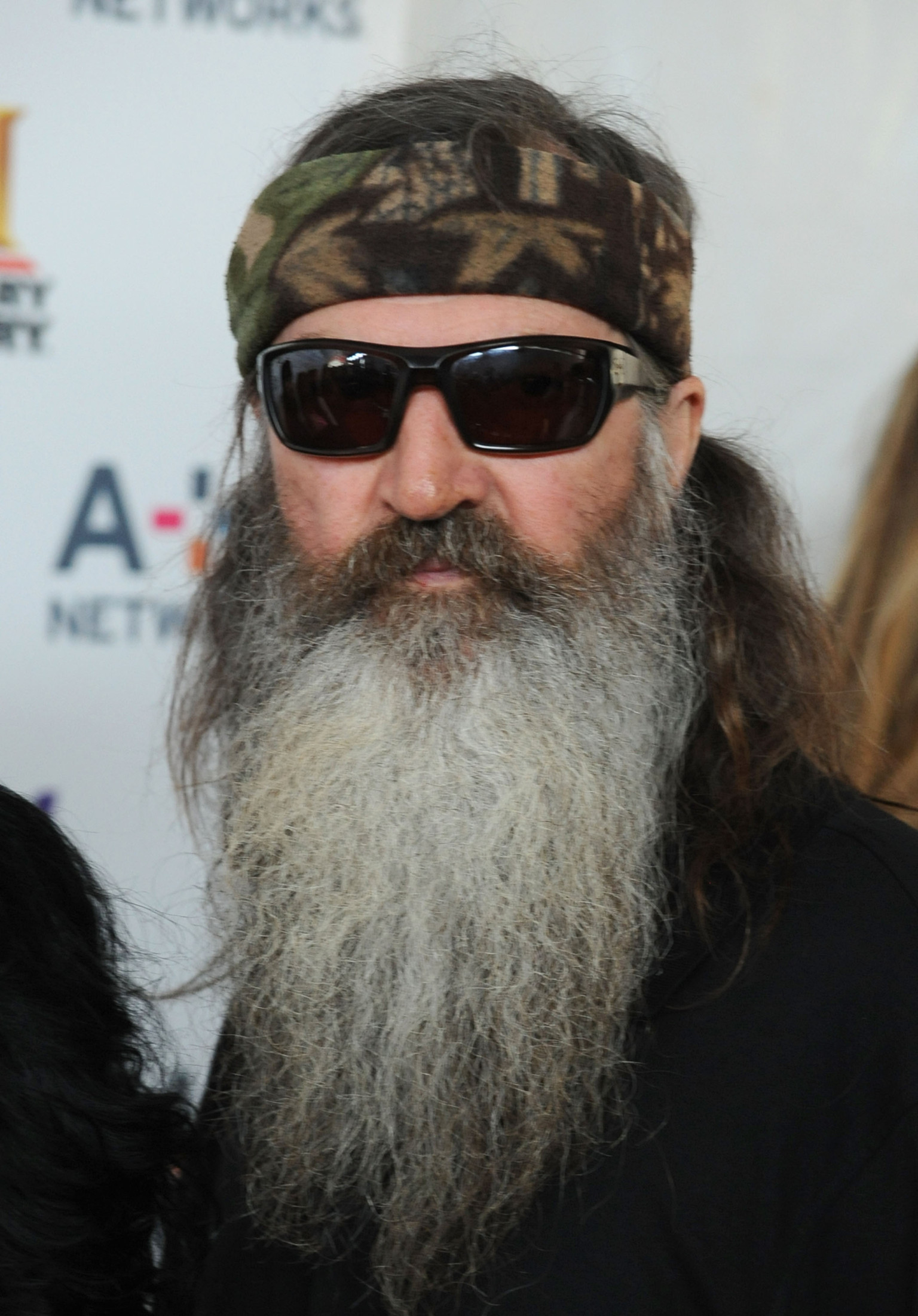
That dude with the beard.
He made some comments about the Bible and TEH GAYS and TEH BLACKS and lots of people got really offended. We're not going to talk about that part because my thoughts on people who make offensive racist/homophobic comments are pretty well known. But then A&E put him on indefinite suspension for those comments and lots of other people got offended. Because FREE SPEECH.
Now, I don't pretend to be a Constitution expert, except insofar as I spend most of my time following politics pretty closely and carry a Pocket Constitution in my backpack like the BAMF that I am. But we need to have a discussion for anyone who thinks your First Amendment right protects you from being fired.
We can talk about the nebulous philosophical concept of freedom of speech, if you'd like, in another post. There is a comment section for a reason. But right now, we're going to talk about Freedom of Speech as it is outlined in the first amendment of the U.S. Constitution. This right protects you from the Federal government revoking your established right to freedom of speech.
"Congress shall make no law respecting an establishment of religion, or prohibiting the free exercise thereof; or abridging the freedom of speech, or of the press; or the right of the people peaceably to assemble, and to petition the Government for a redress of grievances."
That's a precise quote, if you're at all curious. The freedom of speech protected in the Constitution is a political right, not a philosophical right. So, unless your employer happens to be the United States Government, you don't get to go yelling about First Amendment Rights when they tell you you're not allowed to say it.
In particular, though I cannot speak to the exact clauses of the contracts in Duck Dynasty (snooping into private legal documents is not my forte), this case is likely a question of contractual obligations. It is not an uncommon practice for actors' or reality stars' contracts to contain clauses about the kinds of statements they can make in public related to a company's brand. If these clauses exist in any DD contracts, and A&E felt the statements made were antithetical to the channel's brand, they have every right as an employer to tell Mr. Robertson that he cannot say them and to punish him as they see fit (within the confines of the law).
Freedom of Speech protects you from government censorship. It does not protect you from the social or economic implications of saying something other people don't like.
Constitutionally yours,
Rachel Leigh
Friday, December 6, 2013
On Unconditional Love
So Katy Perry has a song out called "Unconditionally."
Come just as you are to me
Don't need apologies
Know that you are worthy
I'll take your bad days with your good
Walk through the storm I would
I do it all because I love you
I love you
Unconditionally
We need to have a chat about the concept of unconditional love. It can be familial, it can be romantic, it can be friendly. But it's a messed up concept.
The idea behind unconditional love is that it can overcome any obstacle and weather any mistakes.
But the thing about love is that it's not supposed to be unconditional. Love is meant to be conditional -- it's based on how you treat one another, whether you trust each other, and the foundations of a strong bond. No one deserves your love in spite of how they treat you.
The idea that someone has a right to your love in virtue of anything other than the fact that they have earned it and you have freely given it contributes to child abuse and spousal abuse in a way that's really unhealthy. Most people think that the concept of unconditional love is cute.
But think about a dog who loves his master unconditionally, who comes when he's called regardless of how many times he's been kicked. It's not cute; it's sad. But we expect people in families or relationships to "work through" the rough times and love each other anyway.
Unconditional love shouldn't be praised as this amazing feat: you have a right to withdraw your love whenever you feel you need to, whenever the bad begins to outweigh the good. Loving someone regardless of how they treat you isn't endearing or romantic. It just hurts.
Come just as you are to me
Don't need apologies
Know that you are worthy
I'll take your bad days with your good
Walk through the storm I would
I do it all because I love you
I love you
Unconditionally
We need to have a chat about the concept of unconditional love. It can be familial, it can be romantic, it can be friendly. But it's a messed up concept.
The idea behind unconditional love is that it can overcome any obstacle and weather any mistakes.
But the thing about love is that it's not supposed to be unconditional. Love is meant to be conditional -- it's based on how you treat one another, whether you trust each other, and the foundations of a strong bond. No one deserves your love in spite of how they treat you.
The idea that someone has a right to your love in virtue of anything other than the fact that they have earned it and you have freely given it contributes to child abuse and spousal abuse in a way that's really unhealthy. Most people think that the concept of unconditional love is cute.
But think about a dog who loves his master unconditionally, who comes when he's called regardless of how many times he's been kicked. It's not cute; it's sad. But we expect people in families or relationships to "work through" the rough times and love each other anyway.
Unconditional love shouldn't be praised as this amazing feat: you have a right to withdraw your love whenever you feel you need to, whenever the bad begins to outweigh the good. Loving someone regardless of how they treat you isn't endearing or romantic. It just hurts.
Monday, December 2, 2013
A Collection of Mini-Thoughts
There have been a lot of silly mini-thoughts that have almost been posts recently.
The inanity of Black Friday and the irony of beating each other to death over half-price TVs a the same night that we've spent telling our families how thankful we are.
A comprehensive list of what I'm thankful for (friends, school, family, not being dead all currently topping the list). A response to Carrie Hope Fletcher's Boys in Books are Better in which I attempt to create my best book-based boy (my alliterative skills are off the charts).
But I think instead, I'm going to talk a bit about family. I was always raised to think that family is important -- to respect members of my family, to have people's backs, to love family. But I also learned that blood alone is not the be-all-end-all of what it means to be family.
Family is made up a lot by choices. Marriages, divorces, re-marriages should be enough to give some insight into what I mean here -- nothing fundamentally has changed in the physical makeup of a family, but a lot has changed in the choices that defined what "family" meant.
Sometimes the choices aren't always very easy, and sometimes, it seems, the choices end up being wrong. But my family, over the years, has been a series of add-ons and removals as it seemed necessary, and it makes me kind of happy to finally see some representations of chosen families in media, rather than a reinforcement of the idea that "because they're blood you have to love them."
Saturday, November 16, 2013
On the Gender Politics of Mental Illness
In case you can't tell, I am a vocal feminist and also really into mental health.
So today I think we're gonna sit down and have a conversation about the gender politics of mental illness.
Depression and anxiety are both, according to estimates, far more prevalent in women than men. In fact, hysteria, a previously-accepted term for what we now typically associate with anxiety disorders, comes from the Greek hysterikos, "of the womb." We typically associate depression and stress with feminine traits. According to the World Health Organization, women are more likely than men to be diagnosed with depression and prescribed psychoactive medications than men, even when two patients score similarly on standardized depression-screening scales.*
Statistically, however, men are 4 times more likely to commit suicide in the United States than women.** Clearly, the perceived difference in mental illness does not account for this massive difference in suicide rates -- if women are always more depressed, why are men more likely to kill themselves?
I think a large part of it comes down to the fact that mental illness and mental distress are seen as typically feminine. As a result, if a woman is experiencing what is considered a typical feminine flaw, they are encouraged to seek help. Men, however, are socialized to avoid discussion of perceived emotional weaknesses, and as such are taught to suppress feelings of depression and anxiety, rather than seeking treatment or coping mechanisms.
Around the world, however, there are also a number of conditions which create situations in which women are, more often than men, exposed to psychologically-triggering experiences that can manifest in mental illness -- social subjugation, sexual assault, and the stresses of childcare and family provision are all highly-correlated with mental illness, and these problems are more prevalent for women, across the spectrum.
Whether the statistics tell the full story or not, there seems to be a significant interplay between traditional gender roles and perceptions of mental illness, and that presents problematically in the representation of both females and those individuals with mental illness.
Yours,
Rachel Leigh
Wednesday, November 6, 2013
On Knowing Vs. Doing
There's nothing quite like being forced to watch Super Size Me for the fourth time to bring out the "we got the memo" mood in me.
I think one of the interesting things about the PSAs about the dangers of smoking, eating fast food, safe driving, etc., is the fact that no one I know doesn't already know about them.
We've been raised in a culture that knows that certain behaviors are dangerous. I think a lot about the rise in "molly" or MDMA use in the EDM culture -- and how, if you let people in on the little secret that MDMA is pure ecstasy, no one didn't know that it could be dangerous. I remember talking about ecstasy in DARE (drug awareness education program) in elementary school. We all knew what it was and why it could be so dangerous.
I also think about fast food or junk food consumption -- we pretty much all know it's bad for us. Shaming someone who's eating it doesn't suddenly make them suddenly decide that it's not good for them and stop.
The choices people make: to smoke, or eat unhealthy food, or do things they know can be unsafe, are made, at this point, in spite of the fact that everyone knows they're bad. Why people might choose to do something they know isn't good for them comes down to temporarily weighing pros and cons or the cognitive dissonance between what they know and what they want or believe. It's not a matter of PSAs...it's about changing attitudes, day in and day out, to change the instinctive reactions that override the rational knowledge.
I think one of the interesting things about the PSAs about the dangers of smoking, eating fast food, safe driving, etc., is the fact that no one I know doesn't already know about them.
We've been raised in a culture that knows that certain behaviors are dangerous. I think a lot about the rise in "molly" or MDMA use in the EDM culture -- and how, if you let people in on the little secret that MDMA is pure ecstasy, no one didn't know that it could be dangerous. I remember talking about ecstasy in DARE (drug awareness education program) in elementary school. We all knew what it was and why it could be so dangerous.
I also think about fast food or junk food consumption -- we pretty much all know it's bad for us. Shaming someone who's eating it doesn't suddenly make them suddenly decide that it's not good for them and stop.
The choices people make: to smoke, or eat unhealthy food, or do things they know can be unsafe, are made, at this point, in spite of the fact that everyone knows they're bad. Why people might choose to do something they know isn't good for them comes down to temporarily weighing pros and cons or the cognitive dissonance between what they know and what they want or believe. It's not a matter of PSAs...it's about changing attitudes, day in and day out, to change the instinctive reactions that override the rational knowledge.
Sunday, October 20, 2013
On Mental Illness and Identity
Watching a PBS Frontline documentary about the rise in diagnoses and medications for young children with mental illness, I was caught by something.
This documentary, which is supposed to objectively address the controversy surrounding early childhood mental healthcare (particularly early exposure to psychoactive medications) and which featured psychologists, and psychiatrists, experts in the field, was making a glaring error.
"My patients were bipolar."
Your patients are not bipolar. For a lot of people struggling with mental illness, the recognition that they do not have to be defined by their battles, is a massive step forward in recovery or control. You would never tell a cancer patient that their diagnosis made THEM cancerous. We recognize that an illness does not have to fundamentally define the person who has it.
And yet, one of the most stigmatizing things you can do to a person with mental illness is to define them by their illness. Your patient is not bipolar. Your patient has bipolar disorder. Your patient may also have acne, irritable bowel syndrome, blue eyes, or a debilitating disability. None of these things define that patient. They are a whole, complex human being, defined by their wants and needs, goals, history, friends, family, talents, weaknesses, and more. You provide a huge blow to their sense of self-worth to reduce them to their diagnosis.
Especially as a care provider, this kind of stigmatizing language is incredibly unacceptable. How is a patient supposed to see themselves as something beyond their disorder if you, as the expert who is supposed to help them, cannot?
Identifiably yours,
Rachel Leigh
This documentary, which is supposed to objectively address the controversy surrounding early childhood mental healthcare (particularly early exposure to psychoactive medications) and which featured psychologists, and psychiatrists, experts in the field, was making a glaring error.
"My patients were bipolar."
Your patients are not bipolar. For a lot of people struggling with mental illness, the recognition that they do not have to be defined by their battles, is a massive step forward in recovery or control. You would never tell a cancer patient that their diagnosis made THEM cancerous. We recognize that an illness does not have to fundamentally define the person who has it.
And yet, one of the most stigmatizing things you can do to a person with mental illness is to define them by their illness. Your patient is not bipolar. Your patient has bipolar disorder. Your patient may also have acne, irritable bowel syndrome, blue eyes, or a debilitating disability. None of these things define that patient. They are a whole, complex human being, defined by their wants and needs, goals, history, friends, family, talents, weaknesses, and more. You provide a huge blow to their sense of self-worth to reduce them to their diagnosis.
Especially as a care provider, this kind of stigmatizing language is incredibly unacceptable. How is a patient supposed to see themselves as something beyond their disorder if you, as the expert who is supposed to help them, cannot?
Identifiably yours,
Rachel Leigh
Sunday, October 13, 2013
On Poverty and Mental Health
I've started to think that mental health is a problem for the wealthy.
I don't mean to say that it's a first world problem which doesn't matter for anybody else -- I think just the opposite. The National Day Without Stigma was this past week, and as always, it just reminded me of how prevalent mental illness is in the world.
And what it really made me start to wonder was about what your options are if you don't have health insurance and can't afford to see anyone. I've been working a bit with a substance abuse rehabilitation facility in Richmond, and to some extent, it's become clear that for some people, that is their option.
Mental illness does not discriminate based on age, race, or social class. If anything, being in a poorer situation increases the chances that you will struggle with depression and anxiety. But the options we have to help people work through these concerns are expensive -- expensive therapies, expensive drugs, appointments with expensive therapists. The options for those who can't afford those are, statistically, homelessness, prison, substance abuse and rehabilitation (if they can afford it or it's court-ordered), or hospitalization in extreme, high-risk cases.
The fact is that we've created a system that works pretty well for those who have access to it, but we've economically-barred some of the highest-need populations from being able to access mental healthcare.
Mental health advocacy is not simply advocacy for those who have the resources. It is also advocacy for those who have never had the resources to get the help they need.
Thinking,
Rachel Leigh
I don't mean to say that it's a first world problem which doesn't matter for anybody else -- I think just the opposite. The National Day Without Stigma was this past week, and as always, it just reminded me of how prevalent mental illness is in the world.
And what it really made me start to wonder was about what your options are if you don't have health insurance and can't afford to see anyone. I've been working a bit with a substance abuse rehabilitation facility in Richmond, and to some extent, it's become clear that for some people, that is their option.
Mental illness does not discriminate based on age, race, or social class. If anything, being in a poorer situation increases the chances that you will struggle with depression and anxiety. But the options we have to help people work through these concerns are expensive -- expensive therapies, expensive drugs, appointments with expensive therapists. The options for those who can't afford those are, statistically, homelessness, prison, substance abuse and rehabilitation (if they can afford it or it's court-ordered), or hospitalization in extreme, high-risk cases.
The fact is that we've created a system that works pretty well for those who have access to it, but we've economically-barred some of the highest-need populations from being able to access mental healthcare.
Mental health advocacy is not simply advocacy for those who have the resources. It is also advocacy for those who have never had the resources to get the help they need.
Thinking,
Rachel Leigh
Subscribe to:
Posts (Atom)