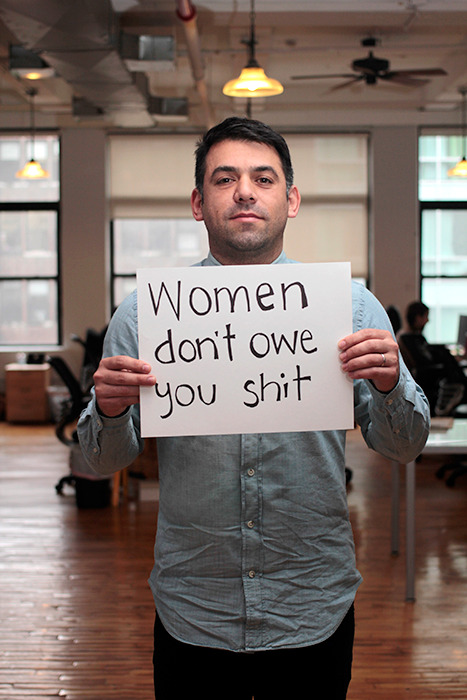
Tuesday, June 27, 2017

It's been six months since the last time I posted. I'm not sure what that says, considering that writing more was an overall goal of mine for the year. I wish I had a better reason than being tired and busy, which I think may just be a side effect of adulting.

These aren't really coherent thoughts, but I wanted to present a short list of things I've learned in my 25 years while I'm feeling kind of reflective.


  1. Your heroes, even your biggest, most larger-than-life heroes, are people. They will make mistakes, and not always own them, and sometimes that will be okay.
  2. Asking how someone is doing, and genuinely being interested in the answer, is one of the easiest things you can do to show you care.
  3. You are under no obligation to make other people happy.
    1. This is not open season to be a dick, though.
  4. I am HORRENDOUSLY uncool. Accepting that you are uncool is the first step in living a slightly more liberated life. 
  5. Sometimes self-care sucks: drink some water, take a shower, get out of bed, go to the doctor. It's good for you.
  6. Sometimes self-care is great: bake cookies, eat cookies, take a bubble bath, pet a puppy. It's good for you.
  7. Fighting is exhausting. Have fun with it or you'll burn out.
  8. WEAR COMFORTABLE SHOES AND SUNSCREEN.
  9. See #8.

Thursday, January 26, 2017

Why Hillary’s Emails Mattered, but Bush’s Didn’t (And Neither Will Trump’s)

You may have heard by now, but high-ranking aides in the Trump White House are using their RNC email accounts. This may have you wondering: isn’t this exactly what everyone wanted to lock Hillary up over? I assume you may be wondering that, because that’s what’s been all over my newsfeed recently. What you may or may not be aware of, however, is that aides and Cabinet officials, including former Secretary of State Colin Powell, did the same thing during the Bush administration. As did other Cabinet officials under Obama.

So why, then,did Hillary’s matter so much when others’ didn’t?
Spoiler alert: It’s sexism.

More importantly, it’s the pervasive idea that women are inherently duplicitous, untrustworthy, or unreliable when it comes to the truth. Whether this trend started with the story of Eve is a question for Biblical scholars to think about – but it certainly is advanced by that story. Eve tricks Adam into eating the fruit of the Tree of Knowledge and thus expels them from Eden, damning the human race for all eternity.

In her essay, “Cassandra Among the Creeps” (also included in her book Men Explain Things to Me), Rebecca Solnit uses the story of Cassandra to talk about the pervasive belief that women lie and men are hurt by it. Cassandra, a character in the Iliad who plays a part in the Trojan War, is cursed by Poseidon to see the future – but have no one around her believe her premonitions. Thus, when she sees visions of Troy burning, people assume she is mad or lying. From Cassandra, she moves to the (routinely discredited) claim that rape victims often lie about their assaults (taking a brief side-trek into Freud, but we’ll forgive that).

So what does Cassandra have to do with Hillary’s emails? Well, if Solnit’s theory about the myth of the duplicitous woman is to be believed – and I’m inclined to believe it – then there is far more to fear from a woman who is hiding something than there is when a man does the same thing. We can arguably believe that a successful man will know how best to delineate official and unofficial communications when conducting some official business on another email address (and deleting some, or yknow, 22 million, of those emails). But we’re conditioned to believe that successful women must have somehow broken the rules to get to where they are. That something in the 30,000 missing emails must implicate her for the shady dealings she had to undertake to get to where she’s at. Because somehow we can simultaneously believe that women are already equal while assuming that most successful women have slept or schemed their way to the top.

Monday, January 23, 2017

Why We Can't Be Friends Anymore

So, you voted for Trump. You might not understand why this means we can't be friends anymore. But we can't. This might seem petty and selfish, but you voted for Trump.

And with that vote:

You told my friends that they are not welcome here. You told my friends that their families, their faith, their futures are not welcome here. You told my friends that their love isn't valid. You told my friends that their lives don't matter, or at least don't matter as much as others. You told my friends that they don't deserve love and respect if they still speak another mother tongue or if their skin is black or brown or if they choose to stand for themselves or the land that is rightfully theirs.

And with that vote:

You have decided that our children don't deserve a good education unless their parents can pay for it. You've decided that our children don't deserve clean water unless their parents can move them. You've decided that our children don't deserve treatment and care unless their parents can afford it. You've decided that our children don't deserve a habitable environment to eventually raise their own children.

And with that vote:

You undermined your promise that sexual assault survivors would get justice. You undermined your promise that I and other women could be and do anything. You undermined your promise to respect the Constitution and the nation that it stands for. You undermined your promise to protect those in need. You undermined your promise that the meek shall inherit the earth.

You made a choice. And with that vote, you decided you didn't need me in your life anymore.

Thursday, January 5, 2017

REINS on the Presidency

Today, House Speaker Paul Ryan announced a bunch of awful thing, including trying to push through an ACA repeal and defunding of Planned Parenthood. But one thing flew a bit under the radar in all of that. He cited the REINS Act, a bill which passed the House back over the summer.

The goal of the REINS Act is explicit and problematic: to completely hobble the executive branch before Obama leaves office and cut the power of Cabinet offices. It's a complete power grab by Congress. The Act would require all major regulations put forward by Cabinet departments to require congressional approval (whereas Congress can currently reject regulations with a vote). This means things like the Title X protections for Planned Parenthood or education reforms would all require Congressional signoff - making them virtually impossible.

This is a problem. Make no mistake - this is not a well-intentioned checks-and-balances test by Congress. It is a political power grab against the first black President and its intention is to strip away the powers of executive branches run by an opposing party - a direct threat to our constitutional democracy. Be warned.

Monday, January 2, 2017

Self-Care Sucks

Self-care sucks sometimes. Not long ago, my office organized a self-care day (which not everyone could attend, which is its own kind of problem) and there were manicures and massages - and many people keep advocating for stress puppies.

But days like that always get me thinking, as conversations around self-care come up (go to yoga! Stay hydrated! Take a bubble bath!). Because that's only part of self-care.

The other part of self-care, and what I would say makes up about 75% of it, really sucks.

Yes, self-care means bubble baths. But it also means dragging yourself to the shower when you've been lying in bed for too long. It means forcing yourself to eat your vegetables when eating itself seems hard. If you only focus on the easy self-care, it ultimately won't improve your overall mental health - and this is a problem.

Because some of the times I've felt the best in the middle of a dark spot have been after I forced myself to do something that sounded completely unbearable in the moment.

On the other hand, self-care is really important right now - so take care of yourselves, loves.

Friday, November 11, 2016

Have you ever gone to scream, only to open your mouth and have no sound come out? I think that's how I feel right now, and I think that's why I've retreated into writing.

Before I begin:
I love you. I know that things might be hard right now, and no one has a right to tell you that you don't deserve to feel or not feel exactly how much you feel right now. People will heal in their own time. Right now, unconditional love feels a bit like a radical act. Embrace it.

Now, on to the harder parts of this. If you have poured your heart into this election, let me first say that this is not your fault. The forces of complacency and white supremacy and hatred in this country won out, but this is not. your. fault. This loss does not rest on the backs of folks of color or women or marginalized communities, and this is not your fault. When you are ready to join the fight, there will be space. Until then, take care of yourself.

I'm still trying to process some pieces of this. I didn't want to believe that the worst parts of this country could come together in such a way to let this happen - but I also know that for a lot of folks, this is nothing more than a harder version of a battle they've been fighting for a long time. You have a right to lay down your armor, even just for a minute. I will try to protect you while you do.

I don't have a coherent plan, just a collection of thoughts and feelings and a newly-invigorated desire to fight hard and love harder in the face of a lot of darkness. Hold each other close.

Sunday, October 16, 2016

Thinking

I've been thinking a lot about a lot of things these days. Like the fact that Planned Parenthood is turning 100, and reconciling a century of complicated but powerful history. Like anxiety and mental health and navigating a complex landscape of illness and wellness. Like the election and the work to still be done. Like how I've been thinking about how most women can point to a very young age when they first realized that men thought they had a right to their bodies. I've been thinking about a lot. I'm hoping to be able to make that coherent in the coming weeks.

Friday, September 23, 2016

Why You Shouldn't Vote for Gary Johnson (A Listicle)

This was originally the text of an email, but it seemed worth sharing.
1. He's only sort of pro-choice.
"Life is precious and must be protected. A woman should be allowed to make her own decisions during pregnancy until the point of viability of a fetus." (source: Johnson's 2012 campaign site, by way of ontheissues.org (a nonpartisan non-profit)). It should be noted that "viability" is a term that's disputed in the medical community and is typically used to be deliberately vague, but is often used to prop up 20-week bans.

Also: "I would have signed a bill banning late term abortion" (source:  2011 GOP Primary Debate)

2. He's opposed to the federal minimum wage.
Not raising it. The minimum wage. (source:http://secure.isidewith.com/candidate-guide/gary-johnson# Submitted by Johnson himself)

3. He supports Citizens United and opposes restrictions on campaign spending by corporations.
"Yes, any restriction on campaign spending violates the first amendment" (source)

4. When he was governor of New Mexico, the state's debt increased by almost $3 billion.
(source)

5. He vetoed early release of nonviolent offenders when serving as governor of New Mexico but is running on a platform of decriminalization to decrease the prison population. 
(sources:
"As governor, a highly-publicized bill was coming through the legislature, which would have allowed early release of prisoners due to overcrowding. When the bill passed, I vetoed it...Some representatives (including a few who were potential allies for me) were outraged because it made them look soft on criminals."(source)

"How is it that the United States, the land of the free, has one of the highest incarceration rates in the world? The answer is simple: Over time, the politicians have “criminalized” far too many aspects of people’s personal lives...These factors, combined with the simple fact that we have too many unnecessary laws, have produced a society with too many people in our prisons and jails, too many undeserving individuals saddled with criminal records, and a seriously frayed relationship between law enforcement and those they serve." (source: Johnson's campaign website))

6. He's opposed to mandatory vaccination.

I know this isn't an issue for everyone, but it's a big red flag in my book. (source: Johnson's Twitter)

7. He prides himself on viewing government the same way as Ayn Rand. No really, he wrote about it in Seven Principles of Good Government. "Overall, I think I view big government in the same way that the novelist and philosopher Ayn Rand did--that it really oppresses those that create, if you will, and tries to take away from those that produce and give to the non-producers."

8. He simultaneously supports "increased oversight" for fracking and "deregulating the energy sector," which to me seems contradictory. (source)

9. His 2012 platform supported a 23% national sales tax and the elimination of the IRS. 
As a reminder: sales taxes as the sole form of taxation are regressive taxes that most impact those who are already financially disadvantaged.
(source)

10. He's opposed to the Affordable Care Act (source) and the requirement that insurance companies provide birth control coverage. (source)

Other notes: He opposes any restrictions on firearms (source); He believes in climate change but no measures to stop it (or rather, only free market interventions) (source); I, for one, find his foreign policy underdeveloped and kind of incoherent (source, other source)

And a few reasons you might still like him: He says that banning immigration for religious reasons is unconstitutional (it is); He supports gay marriage; He supports the legalization of marijuana; He supports term limits for congressmen and opposes Voter ID laws; He's pro-space travel (Space!)

That being said, I don't think the pros outweigh the cons.

Tuesday, February 17, 2015

On Cybersecurity, Cyberterrorism, and IRL

In discussing Conflict Resolution, the broad category of terrorism often arises in course discussions.  Interestingly, the question recently arose about whether cyberterrorism will ever be seen as a concern as pressing as “physical terrorism.”  I suppose this was prompted by the recent digital attacks on companies like Sony, where the greatest loss is, perhaps, an inconvenience.

The concern seems clear – if the choice is between Blue Cross being hacked and people needing to double-down on their identity fraud protection and a bomb going off on a busy public street, shouldn’t the bulk of our time and resources be directed at the one which might pose lethal risk?

This distinction between “physical terrorism” and cyberterrorism relies, in large part, on a false dichotomy between the physical world and the digital world – as if physical objects are not often controlled by computers or other digital devices.  Many writers have talked about the disconnect between your life online and "IRL."  Except in a world where you can lock your front door from your phone, disable alarm systems from your laptop, and drone strikes are conducted from behind computer screens, making this assumption is not only unrealistic but irresponsible.

Thankfully, the U.S. government does not seem to be making the same mistake about assuming cyberterrorism is categorically different or less serious.  Two days ago, the President issued an executive order focusing on Cybersecurity.  While it’s great to see someone taking the possibility of a full-scale assault on communication networks seriously, it still seems to take the issue less than seriously, and also focus primarily on the communication and economic impacts.  You can read the White House’s summary of the initiative here.

Interestingly, the government should be among those who most know the physical implications of cybersecurity threats.  After all, with ties to the infamous Stuxnet virus that took out an Iranian nuclear facility, the U.S. government is fully aware of the potentially catastrophic risks to physical infrastructure and human life that can come from the undermining of digital networks.  But hey, that was an Iranian nuclear facility – and it’s not like there aren’t, you know, 1500 nuclear plants worldwide whose reactors were created by the same company and likely susceptible to the same or similar digital attacks.

Insecurely yours,
Rachel Leigh

Tuesday, February 10, 2015

On Food

I consider myself a foodie.  I love food.  Now, I've had people point out that a lot of people love food, because it's necessary to our continued existence.

But let me make myself clear: I am obsessed with food.  I follow Instagram accounts that profess their love to foods over human beings.  Food is bae.  I find myself obsessing over everything from the micro-level chemical reactions that occur when cakes bake or meat caramelizes to the macro-level composition of meals surrounding which food ought to be paired with which wine, beer, or other beverage pairing.

I can point to a moment in my life when I started obsessing over food: about 10 o'clock one Friday night when I was about 13, when I realized that I could watch Unwrapped on the Food Network when I was staying at my dad's house.  And then when I realized I could watch the Food Network when I woke up Saturday morning.  Or that I could watch Iron Chef at 3 AM when I couldn't sleep.  Food was solace when I didn't know what else to do.

The day I found out how to make brownies from scratch was a day that my life changed forever.  I had done some minor baking in Home Ec. and had been making some breakfast foods for years, but the moment I discovered baking from scratch, I discovered my sanctuary.

Baking and cooking are a form of stress relief for me.  When I am deep in perfecting a recipe, nothing in the world can distract me or make me feel less-than.  Even when the finished product is not quite what I've expected, the lessons I learn in the process only serve to drive me to learn more.

There is a part of me that has thought, at multiple times throughout my college and graduate school career, that I ought to drop out and pursue culinary school.  I've been asked if I've ever considered opening a bakery or pursuing a career as a food critic -- the fact is, I've strongly considered both.

I worry sometimes that following my love of food into a career would turn a pastime and retreat into a task on my to-do list.  They say that if you find a career you love, you'll never work a day in your life.  But I love academics, and I still find days when I need the escape.  To have my escape taken away would be absolutely heartbreaking.

Deliciously yours,
Rachel Leigh

Tuesday, January 27, 2015

On Apologizing

I'm not going to talk about Leaning In, or anything like that, but you may have noticed I did not apologize in my last post for not posting more frequently.  One of the goals I set for myself in this new year and hopefully for the rest of my life is to stop apologizing for things that don't need apologies for.

Don't get me wrong, I will never stop apologizing when I have done something wrong or hurt someone, especially someone I care about, because it's, y'know, important for creating healthy relationships in life.

But studies have shown, and Pantene has famously commercialized, the fact that women apologize more often than men.  This then translates into the perception that women may be more incompetent or less confident, because they apologize more frequently.  I know I apologize too much.  I have heard it since before I started working, and I have heard it in response to apologizing for things that other people don't consider apology-worthy offenses.

My mother sometimes says that she thinks I learned this habit from her.  Maybe it was a part of it, but it was also learning from a young age that more of the things I do, like speaking up when I want to be heard, are seen as bossy or pushy or somehow deserving of an apology.

A study out of the University of Waterloo in Ontario claims that the difference in apologies, when adjusted for the number of times that someone feels like they have committed an offense, doesn't present a gender gap, but that women, on the whole, did apologize more.  What this implies, then, is that women perceive having wronged someone in a way which deserves an apology much more frequently than men do, and thus apologize more.

As someone who wants to be taken seriously and not perceived as self-conscious, timid, or incompetent, I have resolved to apologize less.  I hope other people will join me on this journey.

Unapologetically yours,
Rachel Leigh
Apparently my blog has over 12,000 pageviews.  I mean, over 5 years, that's probably not a huge deal, but I'll deal with that.

I haven't been the best about maintaining this blog, or really any of my non-academic writing, since I started school.  I haven't sent a column into Digital America in a while, although you should definitely still check out all the amazing content they've been producing, and I'm hoping I can fix that at some point.

I wish I had a better excuse than being overwhelmed, but when push comes to shove, that's really what it's been.  I've often been afraid to talk about my anxiety and the way it impacts the way I live my life, but grad school has been especially taxing on that aspect of my life.  I've had to be willing to acknowledge my limits and devote a lot of my free time to self-care to keep myself from completely shutting down.  Thankfully, I've had an amazing support network in my life over the last few months to help with it..

There are very few things I love more than writing, and I would like to write a lot more.  Here's hoping I achieve that.

Wednesday, November 5, 2014

On Street Harassment

Hellooooo beautiful people!

I'm going to leave aside the fact that I realize my blog is in serious need of redesign.  Content before form, and the content has been sorely lacking.  I apologize for this, and would like to blame it on the amount of writing I do for class as a full-time graduate student, but that's not an excuse.  I should always find time for this.  I promise, I'll give you all an update on grad student life in the near future.

In a weird way, I'd like to thank the talk I was at this evening by the incredibly inspiring Ta-Nehisi Coates for reminding me about why I need to write -- and not just critical response papers for graduate courses, but down and dirty writing about things that matter both to me and in the larger context.

If you've read anything I've had to say on this blog any time in the last (nearly) five years, you know that there's no way I could make it through the recent street harassment/catcalling dialogue in the aftermath of the "Ten Hours of Walking in NYC as a Woman" video.

I appreciate the criticisms that the fact that the woman in the video was a paid actress and that the editing of the video disproportionately displays men of color doing the catcalling.  These are valid and understandable criticisms.

But they do not change the discussion.

I repeat: valid criticisms of the methodology of the video do not change the discussion which ought surround it.

Because while the actress might have been planted, the comments and interactions which occurred throughout the video were not scripted.  And the experience of this particular woman, on camera, is not one with which women are unfamiliar.

To hear responses from men about how you should just "ignore it," when ignoring it only prompts further comment and, in multiple cases in the video, being repeatedly followed and harassed, or "stand up for yourself" when women are killed for confronting their harassers seems to show that people don't really understand what's going on.

The issue is the idea that women in public have surrendered themselves to attention, wanted or not, simply by being in public spaces.  If you want proof that catcalling isn't the same as "just giving someone a compliment" or "just saying hello," I highly encourage you to check out some of the tweets from #DudesGreetingDudes to see what it looks like when guys say to other guys what men on the street say to women, and how predatory or absurd it begins to sound.

That said: if you are in a position where you feel comfortable and safe confronting your harasser, I encourage you to do so.  Their behavior in a public space is unacceptable and should be repeatedly called out.

From a more personal experience, typically if someone actually is just saying hi, or legitimately complimenting me, I am generally unbothered by it, even though I find it annoying to be confronted in a public space.  But, for the record, "Hey baby, nice legs (or ass, or tits, etc)" or "You should smile!" or "Damn" are not compliments.  They're creepy and unsolicited.  And just because I am personally okay with being greeted by strangers, it does not mean that I am always okay with it, or that it is safe to assume that everyone is.  Many people are not.

It is also never.

I repeat, never.

Acceptable to touch a stranger (or an acquaintance or anyone) without permission.  Not their hair or their butt or anything.

Privately yours,
Rachel Leigh

Monday, September 29, 2014

On YouTube, Sexual Abuse, and Community Response -- Trigger Warning

Let me first say this: I love YouTube.  YouTube is pretty much where I spend most of my free time, checking out new content, new creators, and videos from creators I love.

Which is why the continued reports of sexual abuse by YouTube content creators against their fans, many of whom have been underage, really disheartens me.  This community has been so strong partially because there is a level of transparency involved -- we see our favorite creators, get to openly interact with them, give and receive feedback, and there seems to be a level of personal connection which doesn't exist with, say, TV personalities.

But if there's one thing these instances have shown, it's that people in positions of power over their fans will often abuse that power.

On the other hand, YouTubers themselves have created a culture of mutual accountability -- condemning and cataloging the alleged and confirmed cases.  Former friends of abusers have come forward and said that they can no longer be friends or involved with known abusers.  DFTBA Records has pulled merchandise and support for former creators in light of the scandals.

This has been a community that, unlike many, has made statement after statement that abuse like this has no place in the community and WILL NOT be tolerated.  And that gives me hope.  Especially in light of the way some communities (here's lookin' at you, NFL) are doubling down on their current stances on abuse.  Communities could learn a thing or two about how to handle allegations and cases of abuse, sexual assault, sexual harrassment, and rape from the way these have been handled.

Related: Sam Pepper is a bucket of dicks.

Yours in solidarity,
Rachel Leigh

Sunday, August 24, 2014

On Grammar and Tone

This post is probably going to come across as a little silly.  And also SUPER NERDY.  Bear with me.

I hate exclamation points.

!
Look at it. It's hideous. It's so ostentatious.

This might seem strange to some of you who have interacted with me in person, since I am typically a pretty enthusiastic person.  I have absolutely no problem with exclamations in verbal speech.  You have every right to your enthusiasm.

But I find exclamation points in the written word extremely irritating.  To me, they're kind of the
(sarcasm font, once we figure out how to do that) of enthusiasm.  Realistically, if you are properly excited about something, the words you use should convey that all on their own.  Instead, ending sentences, especially in formal writing, with exclamation points comes across as...half-hearted.  Look at me! See how excited I am! Even though no other part of what I'm saying conveys any sense of excitement! I'm using exclamation points because they're a shortcut to fun!
Now, I think they're fitting in some circumstances.  The difference between "Happy Birthday." and "Happy Birthday!" when relying solely on non-verbal cues can be huge, since most people interpret the first as rather flat and unexcited.  However, when not operating solely on brevity, one shouldn't need !!!!!! to convince them that "Happy Birthday. I hope it is every bit as wonderful and joyful as you deserve." is happy, enthusiastic, and sincere.

Punctuation matters in setting a tone in writing.  But the fact is that, too often, it is a short-hand for actual verbal expression.

Also, people who overuse exclamation points are typically just way too happy for my tastes and probably need to get rained on.  Sorry about it.

Unenthusiastically yours,
Rachel Leigh
So, in case you haven't heard, I've relocated a bit more...centrally, I guess.

These days, I'm in DC, starting my Master's program and learning how to live on my own...so that should be interesting.  We'll see how this goes.

Thursday, August 14, 2014

On Privilege, Racism, and Ferguson

My heart goes out today to the people of Ferguson, Missouri.  I cannot know your pain, but I sympathize with your rage.

I am not a person of color.

I am not one to speak often of privilege, because I feel there are people much better suited to speak about it than me.  But I am not a person of color.

It is not my place to take control of your movement or to subsume your anger into my own understanding.  I don't have to worry about what would happen if my son or daughter were shot down in a horrifying act of police brutality -- the color of my skin makes that incredibly unlikely.  I benefit from systemic racism which says that because I am a white woman, particularly a cisgender college-educated white woman, that I am not a threat.

There are places and times when gender is not a gift.  It has often made me afraid to be alone in public settings.  But it has never made me fear police brutality.  I will not have to raise my kids to fear police profiling or extra, unwarranted attention.  I do not have to fear that reaching for my wallet may be confused with reaching for a gun.

The situation is not the same, however, for the black population in America.  I cannot say I understand, because I don't.  I don't get it.  I was not raised with the same fear; I do not face the same threats.  My privilege protects me from understanding the pain Michael Brown's mother must be feeling right now.  But I am sympathetic to your pain, your cause, and your rage, and I will do my best to use my privilege to help things change.

Sunday, August 3, 2014

Esther Day

It's been nearly two months since I last posted something.

And I feel bad about that.

But today is Esther Day, and I think that's a suitable reason to break my silence.

Esther Day is a day that is named after Esther Grace Earl.  It is also her birthday.  Several years ago, Esther told John and Hank Green that she wanted her birthday to be a day when people celebrate non-romantic love (love between friends, familial love, all kinds of not-romcom love).  She also wanted it to be the one day that John and Hank tell each other that they love each other.

I say "wanted" because Esther passed away after a battle with thyroid cancer.  Esther Day is her legacy.

It's kind of cool to think there's a day devoted to non-romantic love, because romantic love monopolizes so much of our attention, that somehow the other forms of love are made to seem less valid or less worthy.  And they're not.  They're a hugely important part of what makes us unique and functional human beings -- the capacity to love and be loved in return, especially in familial and platonic fashions.

So Happy Esther Day.  I love you all.  Please take the time to tell the people YOU love that you love them.

Don't Forget to be Awesome.

Monday, June 2, 2014

On the Friend Zone

Today we're getting down and dirty with one of my favorite feminist topics: The Friend Zone.

Let me preface this discussion by saying that having unrequited feelings for someone sucks.  It's a painful experience, and by no means am I intending to devalue that pain.  You have a right to feel hurt over being rejected.  You have a right to your own emotions.

Now: let's talk about the Friend Zone.

Inherent in the idea of the Friend Zone is the thought that, after a certain amount of time and effort, you are entitled to some kind of reciprocation from the other person involved.  This is not, nor has it ever been, the case.  The Friend Zone thinks of people like gumball machines: if I put enough money/time/effort in, I get my reward.  I deserve that reward.

Realistically, human relationships are a lot more like slot machines.  You can spend all the time and energy and money you have on one and are in no way guaranteed success.  In fact, if you are successful, it's a rare and lucky occurrence.  When you walk away from a slot machine empty-handed, no one feels bad for you.  It's a risk you take when playing the game.  When you walk away from a girl empty-handed (or, y'know, with a friend, which I'm not sure why that suddenly became an undesirable thing to have), she's a "bitch" who "led you on."

I don't think I'd be nearly as upset by this concept were it not for the fact that the Friend Zone is a one-way relationship.  When a guy has feelings for a girl who just wants to be friends, she's FRIENDZONING him.  When a girl has feelings for a guy who just wants to be friends, she's pathetic.  Just look at the way these things are portrayed in movies -- think "He's Just Not That Into You" or Bridget Jones or any number of sappy chick flicks.  Wanting something with a man who doesn't return those feelings is pathetic.  Wanting that with a woman is admirable and "she really should just give him a chance."

It's no coincidence that I'm talking about this right now.  The UCSB attack comes from the same twisted double standard, the same misunderstanding of whether people owe you anything just because you've tried.

This guy says it best:

Angrily yours (full of lady-rage),
Rachel Leigh

Wednesday, April 9, 2014

On Anti-Vaccination Parents

I very well might lose some friends over this one.

We need to talk about vaccines.  We, in particular, need to talk about anti-vaccination parents.

When you refuse to vaccinate your child, you show either a complete misunderstanding of modern medicine or a willful ignorance.  Because vaccines save lives by protecting children against preventable diseases.

There will be people who tell you that the MMR vaccine causes autism.  What they probably won't tell you is that the MMR vaccine is administered for the first time at around a year to a year and a half: roughly the same time that autism begins to noticeably manifest in children, regardless of whether they have gone through vaccinations.  This is partially because most recognizable signs of autism can only manifest as your child starts to develop social, oral, and motor skills.  They also leave out the part where the only study to ever draw the conclusion that autism and vaccines are linked had his medical license revoked for scientific misconduct.

There will be people who will tell you that vaccines aren't tested well, but as this article will tell you, or rather demonstrate through the copious studies to which it links, this is absolutely untrue.

I understand that being a parent and looking at the risks of certain things can make these kinds of decisions terrifying.  Side effects are rare, and typically mild, but what if your child is that one case where they aren't?  It's a tough place to navigate.

But realistically, when you choose not to vaccinate your children, you put other people at risk.  Non-vaccinated populations can allow for viruses to mutate so that the vaccines are no longer as effective.  Non-vaccinated populations put the small portion of the population that can't be vaccinated (because they're too young or have allergies or other health complications) at risk.  Many of these childhood diseases are survivable, but they can also be permanently damaging or even fatal in far more cases than the cases of severe negative reactions to vaccines.

It's not just about your kids, sadly.  It's about everybody's kids.  And when you choose not to vaccinate because Jenny McCarthy says it causes autism, you put everyone at risk.